

Full-size induction cooktops often need a dedicated 208- or 240-volt circuit, but amperage and connection requirements vary by model. Use this pre-purchase framework to check the cooktop, existing circuit, and panel before installation day.
How Much Electricity Does a Dishwasher Use? Cost Per Cycle

Dishwasher wattage tells only part of the story. Learn how to turn kWh per 100 cycles or annual energy data into cost per wash, then see why eco, quick, intensive, and heated-dry programs can produce different results.
Dishwasher High Loop vs Air Gap: Which Do You Need?
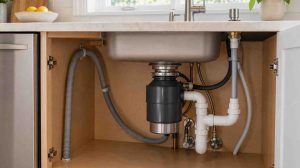
A dishwasher high loop and an air gap both address drainage and backflow concerns, but they are not automatically interchangeable. This guide explains how each works and how to choose the correct configuration using the dishwasher manual, local requirements, and actual sink plumbing.
How Much Electricity Does a Refrigerator Use? Measure kWh First

A fridge runs all year, but its wattage plate rarely tells you the true bill. Use annual kWh, a seven-day meter check, and a simple payback test to see whether yours needs attention or is genuinely worth replacing.
Range Hood Not Pulling Smoke? Diagnose Weak Suction First

A range hood can run loudly and still fail to capture smoke. Use this symptom-first diagnostic sequence to separate poor capture from weak airflow before cleaning, repairing, redesigning, or replacing the hood.
How Much Electricity Do Kitchen Appliances Use? kWh & Cost Guide

Wattage alone does not tell you what an appliance adds to your bill. Learn how to estimate real kitchen electricity use using annual kWh, runtime, cycling behavior, meter data, and your own tariff.
Kitchen Sink Shutoff Valve Won’t Close? Diagnose It First
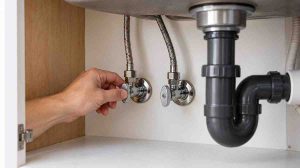
A kitchen sink shutoff valve that will not close can stop a simple faucet repair before it begins. Learn how to distinguish a stuck valve, a valve that turns but does not seal, a leaking stop, and a supply problem before forcing anything.
Range Hood Height Above Stove: A Practical Mounting Guide
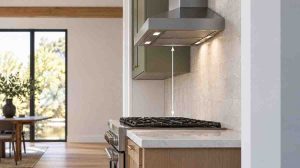
Mounting a range hood too high can weaken capture, while mounting it too low can create clearance, heat, and usability problems. This guide shows how to find the permitted height using the hood manual, cooking-appliance instructions, and project-specific requirements.
Range Hood Makeup Air: 7 Critical Rules Beyond 400 CFM

A range hood above 400 CFM does not create the same makeup-air requirement in every house or jurisdiction. Learn how exhaust capacity, combustion appliances, pressure balance, local code, and makeup-air design fit together before installation.
Range Hood Duct Size: Diameter, Length and Elbows Explained
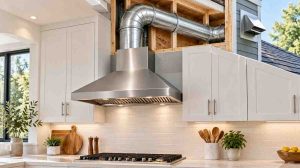
A powerful range hood can still perform poorly when the duct behind it is too small, too restrictive, or badly routed. Learn how to verify diameter, material, elbows, route length, and outdoor termination before the installation becomes expensive to change.
Low Water Pressure in Kitchen Faucet? Diagnose the Cause Before Replacing Parts

Low water pressure at the kitchen faucet does not always mean the whole home has a pressure problem. Use this symptom-first diagnostic sequence to isolate a local flow restriction before replacing parts.
How Many CFM Does a Range Hood Need? A Practical Sizing Guide

A bigger CFM number does not automatically make a better range hood. Learn how to size kitchen ventilation using hood width, placement, capture, ducting, noise, and makeup-air checks.