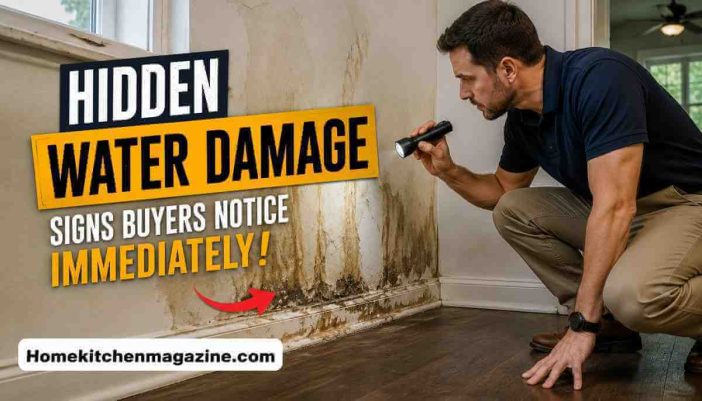
Most buyers don’t panic because they see damage.
They panic because they suspect damage that hasn’t been discovered yet.
A faint cabinet odor. Slight flooring lift near the sink. Paint texture that feels “off.” These signals create uncertainty fast—and uncertainty changes negotiations long before inspectors finalize their reports.
Many homeowners focus on fixing visible problems. Buyers focus on hidden risk.
A small stain rarely scares people.
An unexplained stain does.
That difference matters more than most sellers realize.
Why Hidden Water Damage Changes Buyer Behavior So Fast
Quick Answer
Hidden water damage signs reduce buyer confidence because they suggest ongoing moisture exposure, concealed repairs, mold risk, or future structural costs that may not yet be visible during walkthroughs.
The issue is not always the damage itself.
It’s the possibility that:
- more damage exists,
- repairs were cosmetic,
- or moisture is still active.
That uncertainty creates pricing pressure immediately.
The First Signs Buyers Notice Before Inspectors Do
Most buyers are not trained inspectors.
But repeated exposure to real estate content, renovation videos, and inspection stories has changed buyer behavior dramatically.
Certain signals trigger caution almost instantly.
1. Slight Flooring Separation Near Water Zones
Especially around:
- dishwashers,
- refrigerators,
- sink cabinets,
- island plumbing areas.
Small lifting or swelling suggests long-term moisture—not accidental spills.
This risk pattern overlaps directly with issues discussed in
How to Prevent Costly Water Damage at Home
2. Cabinet Base Swelling
Under-sink cabinetry often reveals hidden moisture before walls or ceilings do.
Buyers notice:
- bubbling laminate,
- soft cabinet corners,
- warped toe kicks.
These are interpreted as:
- ongoing leak history,
- poor maintenance,
- possible mold conditions.
3. Fresh Paint In Isolated Areas
Fresh paint does not always increase confidence.
Sometimes it creates suspicion.
Especially when:
- only one ceiling corner was repainted,
- texture doesn’t match surrounding surfaces,
- repairs appear too localized.
Buyers often interpret isolated cosmetic work as concealment rather than improvement.
4. Musty Odors Near Closed Cabinets
Smell creates emotional reaction faster than visual damage.
Even mild odors suggest:
- trapped moisture,
- poor ventilation,
- previous leaks,
- or hidden mold growth.
This is one reason hidden water damage affects perceived value disproportionately.
5. Minor Ceiling Stains That “Look Old”
Old stains create a dangerous question:
“Was this fixed—or just ignored?”
Without documentation, buyers assume uncertainty.
That uncertainty lowers confidence immediately.
Why Buyers React More Aggressively To Water Risk Than Other Defects
Electrical issues feel technical.
Roof issues feel repairable.
Water damage feels unpredictable.
That distinction matters psychologically.
Water implies:
- hidden spread,
- mold possibility,
- structural uncertainty,
- insurance complications.
Many buyers become far more cautious once moisture uncertainty appears in a property.
This aligns closely with the inspection concerns explained in
Inspection Red Flags That Lower Home Value (What They Really Mean)
The Hidden Cost Most Sellers Don’t Anticipate
Visible damage has repair cost.
Hidden damage has negotiation cost.
That includes:
- reduced offers,
- inspection contingencies,
- delayed closings,
- insurer hesitation,
- repair credits.
Often the largest loss is not remediation.
It’s reduced buyer confidence.
This confidence gap is often what influences pricing decisions. As explored in our analysis of whether a water leak affects home resale value, buyers frequently react to uncertainty long before actual repair costs become part of the discussion.
Areas Buyers Quietly Check During Walkthroughs
Experienced buyers increasingly inspect:
| Area | What They Look For |
|---|---|
| Under sinks | Soft wood, odor, staining |
| Dishwasher edge | Floor swelling |
| Refrigerator line | Moisture residue |
| Ceiling corners | Patch inconsistency |
| Basement below kitchen | Water staining |
| Window trim | Paint bubbling |
Interestingly, many of the warning signs buyers notice first are the same indicators inspectors evaluate later during a formal property assessment. Understanding how home inspectors evaluate water damage helps explain why seemingly minor defects often receive significant attention.
These observations happen before formal inspections begin.
Why Documentation Changes Buyer Interpretation
Two identical stains can produce completely different reactions.
Scenario A — No Documentation
Buyer assumption:
- unresolved leak,
- hidden mold,
- deferred maintenance.
Scenario B — Maintenance Records Available
Buyer sees:
- inspection date,
- repair invoice,
- moisture correction history.
Now the stain becomes:
- understandable,
- isolated,
- manageable.
This shift in perception reflects a broader principle: buyers reward predictability. Consistent documentation and maintenance records are among the most effective preventive maintenance strategies that protect property value over time.
This is why structured maintenance tracking discussed in
How To Document Home Maintenance For Insurance Claims (Step-by-Step System)
has become increasingly important in modern transactions.
Original Value: The “Uncertainty Multiplier” Framework
Here’s the simplest way to evaluate hidden water risk:
Damage Severity × Uncertainty = Buyer Fear
Small damage + low uncertainty
→ manageable
Small damage + high uncertainty
→ negotiation pressure
Large damage + documentation
→ still salvageable
Unexplained moisture signals create disproportionate fear because buyers cannot estimate future cost.
What Homeowners Should Fix Before Listing
Priority order matters.
Highest Priority
- Active leaks
- Supply line corrosion
- Cabinet swelling
- Ceiling moisture stains
Medium Priority
- Cosmetic paint inconsistencies
- Humidity odor
- Drainage improvements
Lowest Priority
- Minor discoloration without moisture history
Many of these conditions are identified early using frameworks from
Kitchen Leak Risk Audit Checklist: 15 Points Homeowners Miss Every Year
Common Seller Mistakes That Increase Buyer Suspicion
Overcorrecting Cosmetic Areas
Fresh paint without explanation often backfires.
Hiding Moisture Odors
Air fresheners during showing create suspicion quickly.
Ignoring Small Signs
Minor swelling becomes major psychological leverage during negotiation.
Having No Maintenance History
Without records, buyers assume neglect.
Insurance-related concerns often emerge from the same lack of documentation. Buyers increasingly want to understand whether past water events would be considered sudden incidents or gradual deterioration under typical homeowners insurance policies.
Recommended Tools & Upgrades
If you want to reduce hidden water risk before listing:
- Leak detection sensors
- Automatic water shut-off valves
- Water pressure regulators
- Updated braided stainless supply lines
These systems reduce both:
- actual damage probability,
- and perceived inspection risk.
They also help establish a documented prevention history, which becomes increasingly important when insurers review recurring water-related incidents or disputed claims.
Hidden water damage rarely affects a transaction by itself. Its influence comes from how buyers, inspectors, insurers, and appraisers interpret uncertainty, maintenance history, and future risk.
FAQ
Do small water stains always reduce home value?
Not always. The problem is usually uncertainty, not stain size.
Can buyers detect hidden water damage before inspection?
Often yes. Odors, swelling, paint inconsistency, and flooring changes are commonly noticed during walkthroughs.
Should sellers disclose previous water damage?
Disclosure requirements vary by location. Documented repairs generally create more trust than concealed issues.
Is old water damage worse than active leaks?
Not necessarily. Active moisture is usually more concerning than documented past repairs.
What Buyers Really Want To See
Most buyers are not searching for perfection.
They are searching for predictability.
A home with:
- documented maintenance,
- controlled moisture risk,
- and transparent repair history
often performs better than a cosmetically flawless home filled with uncertainty.
Water damage becomes expensive when people stop trusting what they cannot see.
The strongest protection is not cosmetic perfection. It is a combination of preventive maintenance, inspection readiness, transparent documentation, and long-term moisture control.
That is why hidden moisture signals matter long before inspectors write their reports.