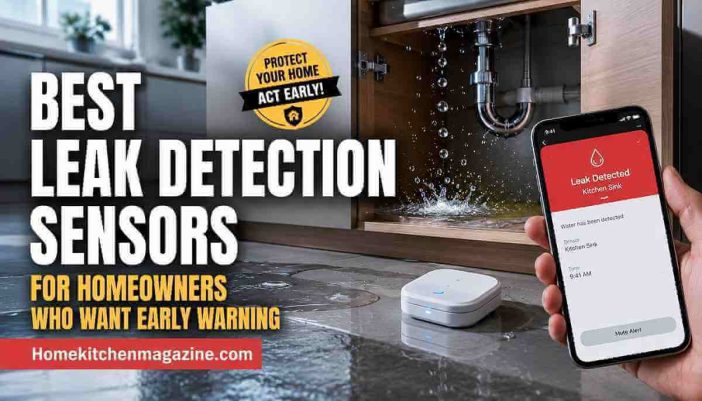
A leak under the sink rarely starts as a disaster. It starts as time — minutes passing before anyone notices moisture spreading behind cabinets, beneath flooring, or inside walls.
The best leak detection sensors are not necessarily the most expensive ones. They are the systems that detect problems early enough to reduce damage exposure before repair costs escalate.
A dishwasher line loosens at 1:12 AM.
The drip is small. Barely visible.
By sunrise, water has migrated beneath the cabinet base. Hours later, flooring begins absorbing moisture. Days later, swelling appears. Weeks later, the insurance claim starts.
Most homeowners assume leak detection is about technology.
It is actually about timing.
The best leak detection sensors reduce the delay between:
- leak start,
- detection,
- response,
- shut-off,
- and damage spread.
That delay determines whether water damage becomes:
- inconvenience,
- repair,
- or reconstruction.
What Leak Detection Sensors Actually Do
Leak detection systems generally fall into three categories:
| System Type | Primary Function | Best For |
|---|---|---|
| Passive Sensors | Detect standing water | Small homes, apartments |
| Smart Wi-Fi Sensors | Send alerts remotely | Occupied homes |
| Flow Monitoring + Auto Shut-Off | Detect abnormal flow and stop water | Larger homes, higher-risk properties |
The problem is not choosing “smart” vs “basic.”
The problem is matching the system to:
- layout,
- occupancy,
- appliance risk,
- and response speed.
Why Early Warning Matters More Than Most Homeowners Realize
Water damage severity depends on:
Leak Size × Detection Delay × Exposure Duration
Most leaks are not explosive pipe failures.
They are:
- slow drips,
- loose fittings,
- appliance connector failures,
- unnoticed condensation,
- supply line degradation.
As discussed in How To Prevent Costly Water Damage at Home, hidden moisture often causes more structural damage than visible flooding because it spreads silently before detection occurs.
Early warning changes exposure time.
And exposure time changes repair cost.
The Best Leak Detection Sensors By Home Layout
Small Apartments And Condos
Best choice:
- compact Wi-Fi leak sensors,
- battery-powered systems,
- under-sink placement.
Why?
Apartments usually have:
- limited plumbing zones,
- smaller exposure area,
- shorter response distance.
The highest-risk locations are:
- kitchen sink cabinets,
- dishwasher supply lines,
- refrigerator ice maker connections.
Avoid:
- overly complex whole-home systems,
- unnecessary automation layers.
Simple systems often outperform complicated setups in small layouts.
Multi-Story Homes
Best choice:
- multi-zone sensor systems,
- app-connected alerts,
- automatic shut-off integration.
Why?
Water travels downward.
A second-floor leak can damage:
- ceilings,
- insulation,
- wiring,
- flooring,
- lower-level cabinetry.
This dramatically increases exposure severity.
Homes with:
- hardwood flooring,
- finished basements,
- open-concept layouts,
benefit most from automatic shut-off capability.
This aligns with the risk framework discussed in Are Automatic Water Shut-Off Valves Worth It for Kitchens?
Older Homes With Aging Plumbing
Best choice:
- flow-monitoring systems,
- shut-off valve integration,
- pressure monitoring capability.
Older homes often contain:
- aging connectors,
- mixed plumbing materials,
- older shut-off valves,
- hidden corrosion points.
The goal is not convenience.
The goal is reducing unpredictability.
Vacation Homes Or Frequently Empty Properties
Best choice:
- remote monitoring,
- app alerts,
- automatic shut-off systems.
Delayed response is the biggest risk multiplier in vacant homes.
A leak left running for:
- hours,
- days,
- or weeks
creates exponentially larger repair exposure.
In these situations, automatic shut-off becomes significantly more valuable than alert-only systems.
Where Leak Sensors Should Actually Be Placed
Most homeowners place sensors where leaks become visible.
That is too late.
The best leak detection sensors work when placed:
- at the origin point,
- not the spread zone.
Highest Priority Locations
Kitchen
- under sink cabinet,
- behind dishwasher,
- near refrigerator supply line.
Laundry Area
- behind washing machine,
- near drain pan.
Water Heater Area
- near pressure relief valve,
- near base perimeter.
Basement
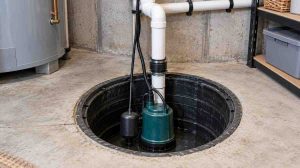
- sump pump area,
- foundation-adjacent plumbing.
A water sensor beside the pit can warn you that water is rising, but it does not prove the pump can move that water out. Use our sump pump testing guide to verify the float, pumping cycle, discharge path, and backup system before heavy rain.
As explored in Kitchen Leak Risk Audit Checklist: 15 Points Homeowners Miss Every Year, placement accuracy matters as much as sensor quality.
The Biggest Mistake Homeowners Make
The most common mistake is assuming:
notification = protection.
It does not.
A sensor only reduces damage if:
- someone receives the alert,
- someone responds quickly,
- or the water stops automatically.
This is why many inspection-related moisture cases occur even in homes that already had leak sensors installed.
Technology without response planning creates false confidence.
Recommended Tools & Upgrades
If you want to reduce risk and avoid costly damage, these are the most practical upgrades homeowners invest in:
- Leak detection sensors for early warning
- Automatic water shut-off valves for immediate protection
- High-quality braided stainless steel supply lines
- Water pressure regulators to reduce connector stress
These upgrades are not about convenience.
They are about reducing failure probability and limiting damage exposure.
How To Choose The Right System
Choose Passive Sensors If:
- you live in a small space,
- you are usually home,
- your plumbing layout is simple.
Choose Smart Wi-Fi Sensors If:
- you travel frequently,
- you want remote alerts,
- you want multi-room monitoring.
Choose Auto Shut-Off Systems If:
- your home has high water damage exposure,
- your kitchen sits above finished space,
- your plumbing is aging,
- your insurance deductible is high.
What Inspectors And Insurers Actually Care About
Inspectors rarely care about:
- app features,
- smart-home branding,
- voice assistant compatibility.
They care about:
- active moisture,
- corrosion,
- leak history,
- system predictability.
Insurers care about:
- claim severity,
- water exposure duration,
- repeat incidents.
This connects directly to Inspection Red Flags That Lower Home Value, where water-related uncertainty consistently lowers buyer confidence.
Practical Framework Before Buying
Before purchasing a leak detection system, ask:
- Where is my highest-risk leak zone?
- How quickly would I notice a leak today?
- Would I still know if I were away from home?
- Does the system stop water or only send alerts?
- Can I realistically maintain it long term?
The best leak detection sensors are the ones homeowners:
- maintain,
- test,
- and actually respond to.
FAQ
Are leak detection sensors worth it?
Yes — especially in kitchens, laundry rooms, and older homes where small leaks can remain hidden long enough to cause structural damage.
Do leak sensors stop water automatically?
Most basic sensors do not. Automatic shut-off capability requires integrated shut-off valve systems.
Where should leak sensors be placed?
At the lowest point near likely leak origins:
under sinks,
behind appliances,
near water heaters,
beside shut-off valves.
How often should leak sensors be tested?
At least quarterly. Batteries, app notifications, and sensor response should all be verified regularly.
Why Early Warning Changes Everything
Most water damage does not begin as catastrophe.
It begins as unnoticed time.
The best leak detection sensors reduce that time window before:
- moisture spreads,
- materials absorb water,
- mold develops,
- or repairs escalate.
But sensors alone are not enough.
Reliable protection comes from:
- correct placement,
- realistic maintenance,
- rapid response,
- and systems designed around actual home risk.
The goal is not owning smart devices.
The goal is keeping small leaks from becoming expensive stories.