
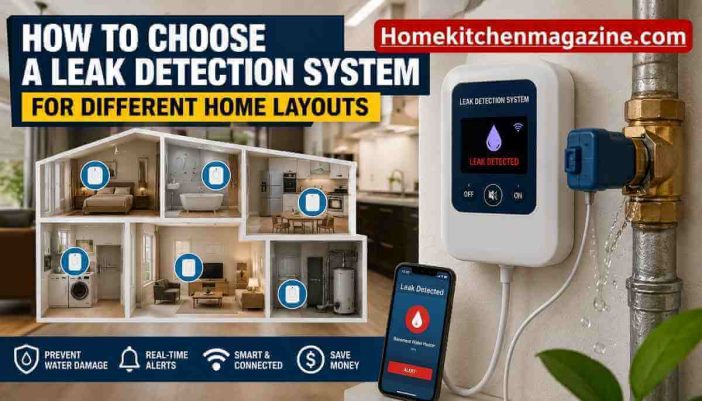
A leak detection system that works perfectly in a small single-story home may fail to protect a multi-level property with hidden plumbing zones. The problem is rarely the device itself. The problem is mismatch.
This guide explains how to choose a leak detection system based on home layout, exposure severity, plumbing concentration, and response-time risk — not marketing claims.
After major water damage cases, homeowners often discover the same uncomfortable reality: the leak was detectable long before it became expensive.
A refrigerator connector fails while the house is empty for the weekend. A dishwasher supply line drips beneath hardwood flooring. A second-floor laundry leak reaches ceilings below before anyone notices.
Most homes do not need “the most advanced” leak detection system.
They need the right one for the way risk actually spreads through the structure.
Why Home Layout Matters More Than Product Features
Many homeowners shop for leak detection systems by comparing:
- app quality,
- smart home integration,
- price,
- notification speed.
But inspectors and insurers evaluate something different:
Exposure severity.
A small leak in:
- a slab-floor kitchen,
is very different from: - a second-floor kitchen above finished living space.
The same leak produces completely different consequences.
That changes which system makes sense.
The Four Main Leak Detection Categories
1. Passive Leak Sensors
These are small sensors placed:
- under sinks,
- behind dishwashers,
- near water heaters,
- beside washing machines.
When moisture touches the sensor:
- alarm activates,
- app notification sends alert.
Best for:
- low-risk layouts,
- occupied homes,
- smaller properties.
Weakness:
They detect leaks.
They do not stop water flow.
This limitation becomes critical in homes where exposure duration escalates quickly, particularly in layouts discussed in our guide on How to Prevent Costly Water Damage at Home.
2. Automatic Water Shut-Off Systems
These systems:
- detect leaks,
- shut off water automatically.
Best for:
- multi-story homes,
- vacation properties,
- older plumbing systems,
- high-value interiors.
They reduce:
- detection time,
- exposure duration,
- total damage severity.
Many homeowners underestimate how quickly active leaks escalate without automatic interruption, especially in kitchens with aging connectors and appliance lines.
3. Whole-Home Flow Monitoring Systems
These systems analyze:
- pressure changes,
- continuous flow,
- abnormal usage patterns.
They can detect:
- hidden leaks,
- micro-leaks,
- slow plumbing failures.
Best for:
- large homes,
- complex plumbing networks,
- hidden pipe layouts,
- homes with older infrastructure.
4. Hybrid Systems
These combine:
- moisture sensors,
- flow analysis,
- automatic shut-off.
Best for:
- high-risk properties,
- expensive flooring,
- finished basements,
- homes with insurance sensitivity.
Choosing A Leak Detection System By Home Layout
Single-Story Slab Homes
Risk Profile:
- Lower structural spread risk
- Faster visible detection
- Lower ceiling exposure
Recommended Setup:
- Passive leak sensors
- Kitchen-focused monitoring
- Refrigerator + dishwasher coverage
Priority:
Early awareness.
Not necessarily automatic shut-off.
Multi-Story Homes
Risk Profile:
- Water spreads vertically
- Ceiling damage risk
- Hidden structural exposure
Recommended Setup:
- Automatic shut-off systems
- Multi-zone sensors
- Whole-home monitoring
In these layouts, delayed response often matters more than leak size.
This overlaps directly with the inspection concerns covered in Inspection Red Flags That Lower Home Value (What They Really Mean).
Older Homes With Mixed Plumbing
Risk Profile:
- Aging supply lines
- Unknown installation quality
- Hidden corrosion risk
Recommended Setup:
- Flow monitoring
- Pressure alerts
- Automatic shut-off integration
Older homes benefit from layered detection because failure points are harder to predict.
Vacation Homes Or Frequently Empty Properties
Risk Profile:
- Long exposure duration
- Delayed manual response
- Major escalation potential
Recommended Setup:
- Remote monitoring
- Cellular backup alerts
- Automatic shut-off valves
Homes left unattended should prioritize response automation over simple notification systems.
The Most Overlooked Variable: Water Damage Exposure Zones
A leak beside:
- tile flooring,
is not the same as a leak beside: - engineered hardwood,
- custom cabinetry,
- finished basement ceilings.
Before choosing a system, map:
- flooring vulnerability,
- hidden plumbing paths,
- ceiling exposure,
- appliance concentration.
This transforms leak detection from gadget shopping into risk management.
Common Mistakes Homeowners Make
Buying Based On Smart Features Alone
App quality does not reduce damage.
Response speed does.
Ignoring Shut-Off Capability
Alert-only systems still allow:
- continuous flow,
- overnight damage,
- hidden saturation.
Poor Sensor Placement
Sensors placed:
- too high,
- too far from connectors,
- away from low points,
often miss early leaks entirely.
This issue appears repeatedly in the Kitchen Leak Risk Audit Checklist: 15 Points Homeowners Miss Every Year.
Treating Leak Systems As “Install And Forget”
Sensors:
- need testing,
- battery replacement,
- periodic inspection.
Prevention systems fail silently when ignored.
Practical Framework: Which System Fits Your Home?
| Home Type | Risk Level | Best System Type |
|---|---|---|
| Small slab home | Low | Passive sensors |
| Multi-story family home | Medium–High | Automatic shut-off |
| Older plumbing system | High | Flow monitoring + shut-off |
| Vacation property | High | Remote monitoring + shut-off |
| Luxury interior/high-end finishes | High | Hybrid system |
Recommended Tools & Upgrades
If you want to reduce risk and avoid costly damage, these are among the most practical upgrades homeowners invest in:
- Leak detection sensors for early warning
- Automatic water shut-off valves
- High-quality braided stainless steel supply lines
- Water pressure regulators
- Smart water monitoring hubs
These upgrades are not about convenience.
They are about reducing:
- failure probability,
- exposure duration,
- repair severity.
What Inspectors And Insurers Actually Care About
Inspectors rarely evaluate leak systems as “smart devices.”
They evaluate:
- whether risk appears controlled,
- whether response time is reduced,
- whether maintenance looks predictable.
Insurers increasingly favor homes that:
- reduce claim severity,
- document maintenance,
- use proactive prevention systems.
This is part of the broader maintenance logic explained in Preventive Home Maintenance vs Reactive Repairs.
Editorial Note: The Goal Is Not Zero Risk
No leak detection system guarantees:
- zero leaks,
- zero damage,
- zero failure.
The goal is:
- smaller damage,
- faster response,
- lower uncertainty.
That distinction matters.
The best systems do not eliminate problems.
They limit escalation.
FAQ
Do leak detection systems really prevent water damage?
They reduce damage severity significantly when detection and response happen quickly. Automatic shut-off systems offer the strongest protection.
Are passive leak sensors enough?
Sometimes. In lower-risk homes, passive sensors may be sufficient. In multi-story or high-exposure homes, automatic shut-off systems are usually safer.
Where should leak sensors be placed?
Best locations include:
under sinks,
behind dishwashers,
near refrigerator supply lines,
beside water heaters,
near shut-off valves.
Do insurers care about leak detection systems?
Some insurers view automatic shut-off systems favorably because they reduce claim severity and response delays.
A Better Leak Detection Strategy Starts With Layout Awareness
Most water damage events become expensive because:
- leaks spread unnoticed,
- response comes too late,
- prevention systems were chosen without understanding exposure risk.
A stronger prevention strategy begins with:
- mapping the home,
- understanding water pathways,
- identifying vulnerable zones,
- matching technology to actual risk.
That approach protects more than plumbing.
It protects predictability.
Reference
- Insurance Information Institute (water damage claim trends)
- InterNACHI (inspection risk logic and leak exposure)