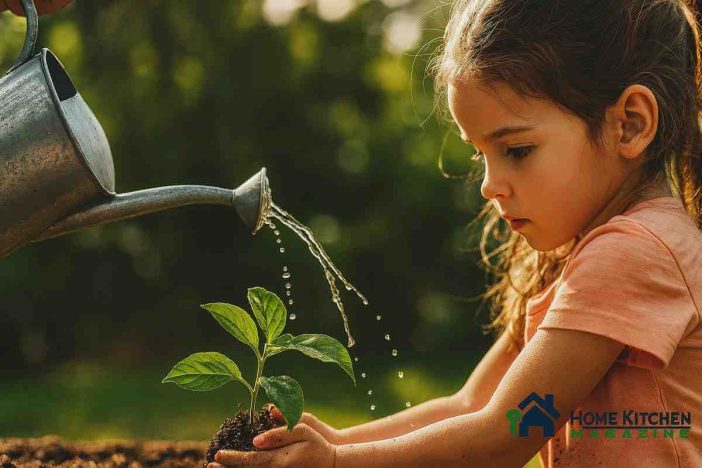
Benefits of gardening for children are often talked about in parenting books, but the truth behind them becomes clearer when you watch a child among leaves, soil, and sunlight. On a quiet morning, before screens light up and routines take over, a small garden can become a place where a child discovers the world in slow, unforgettable detail. You can see it in the way they press their fingers into the soil, in the moment their eyes widen at the first sprout breaking through, and in their soft questions about why some leaves stay green while others curl and fall.
Gardening, in these quiet moments, becomes more than an activity—it becomes a classroom without walls. A place where curiosity replaces distraction, where patience grows alongside seedlings, and where lessons about life unfold not through lectures but through observation. The garden becomes a living story, and the child becomes both reader and narrator, fully immersed in the rhythms of nature.
As children begin to explore the textures of soil and the colors of leaves, it can also be meaningful for parents to introduce them to plants with practical benefits—especially plants that cool your home, which not only make gardening more exciting for kids but also teach them how nature can shape the comfort of the spaces we live in.
Benefits of Gardening for Children
Many children today spend less time outdoors than any previous generation. Busy schedules, academic pressure, and digital entertainment have reduced natural play dramatically. Gardening offers an antidote—an activity filled with slow moments, real physical interaction, living elements, and emotional bonding.
Gardening isn’t just about planting seeds. It’s about teaching children to nurture something, observe change, and understand that growth takes time. This is why gardening is slowly returning as a recommended activity in many early childhood learning models.
1. Gardening Builds Environmental Awareness
Children who garden become children who notice things—soil moisture, insects, plant color, weather, and seasons. These observations, though small, slowly shape a child’s relationship with nature.
They learn:
• Plants need water, sunlight, time
• Soil is alive
• Insects have a function
• Plants respond to care
Over time, children develop empathy for living things. This is the foundation of environmental awareness and sustainable thinking.
A child who waters a plant every morning will grow up understanding nature in a way no textbook can teach.
2. Gardening Teaches Responsibility & Consistency
Responsibility becomes real when the plant depends on them. If they forget to water it, the plant wilts. If they care for it, new leaves appear. This immediate feedback helps children understand cause and effect.
Gardening trains:
• Daily routine
• Dependability
• Pride in taking care of something
• A sense of personal duty
In learning responsibility through plants, children learn responsibility for themselves and their environment too.
3. Gardening Boosts Creativity & Imagination
A garden is not just a physical space—it is an imaginative playground.
Children can:
• Arrange flowers in patterns
• Choose colorful plants
• Paint their pots
• Design a mini garden
• Create stories about the insects they find
Imagination blooms naturally when children interact with open-ended materials like soil, leaves, colors, textures, and stones.
4. Gardening Introduces Children to Different Types of Food & Plants
Many children don’t know how vegetables grow. Gardening helps them understand the journey of food from soil to plate.
This exposure makes children more open to healthy eating because:
• They planted it
• They cared for it
• They waited for it
• They harvested it
Studies show that children are more likely to try vegetables they grew themselves, even if they normally dislike them.
For families living in compact homes, gardening becomes even more meaningful when it is adapted to small corners. This is where thoughtful ideas for maximizing small spaces at home help children see that nature can grow anywhere—even in the tiniest balcony or a modest kitchen window.
5. Gardening Illustrates Growth, Change & Patience
A seed doesn’t sprout immediately. It takes days, sometimes weeks. Gardening quietly teaches children how to wait, observe, and understand gradual change.
Children learn:
• Not everything is instant
• Growth takes time
• Consistency is important
• Small changes matter over time
This helps them build patience—something increasingly rare today.
6. Gardening Promotes Active, Healthy Movement
Gardening involves real physical activity:
• Scooping soil
• Carrying small tools
• Watering
• Collecting leaves
• Digging
• Lifting pots
These activities strengthen muscles, refine motor skills, and help children grow more coordinated.
Gardening is one of the best natural exercises for kids.
7. Gardening Supports Mental and Emotional Development
Nature calms the mind. When children garden, they feel grounded, present, and engaged. Many experts believe gardening reduces stress in children because it activates the senses and reduces overstimulation.
The emotional benefits include:
• Improved mood
• Reduced anxiety
• A sense of accomplishment
• Better emotional regulation
• Increased focus
Gardening is often used as therapy for children with attention or behavioral challenges because it teaches calmness through repetitive, gentle tasks.
8. Gardening Helps Children Understand Nutrition
Growing food at home or school helps children understand nutrition in a simple, visual way. They see the entire food cycle—from seed to harvest to meal.
This gives them a real appreciation for food and makes them more conscious eaters. They also learn that healthy food doesn’t just “appear”—it comes from natural processes.
For supporting references, you may place an external link such as Harvard’s guide to children’s nutrition:
https://www.hsph.harvard.edu/nutritionsource/kids-healthy-eating/
9. Gardening Enhances Overall Wellness
Exposure to sunlight and fresh air supports:
• Vitamin D production
• Mood elevation
• Stronger immunity
• Better sleep patterns
Gardening also encourages mindfulness. Children become more “present” and aware of their surroundings, which supports emotional balance and mental clarity.
10. Gardening Strengthens Sensory Skills
Gardening activates the senses more than most indoor activities:
Touch — soil, leaves, textures
Sight — colors, shapes, growth changes
Smell — herbs, flowers, fresh soil
Hearing — insects, wind, birds
Taste — homegrown vegetables & fruits
Sensory-rich learning significantly boosts brain development in early childhood.
Wraping Up: Why Every Child Should Garden
Gardening is more than an activity—it is a learning method, a therapy, a science lesson, an art project, and a bonding experience rolled into one. It teaches patience, responsibility, creativity, empathy, and environmental awareness.
Even a small pot on a balcony can change how a child sees the world.