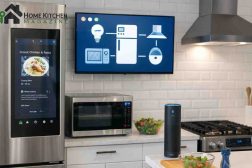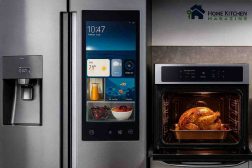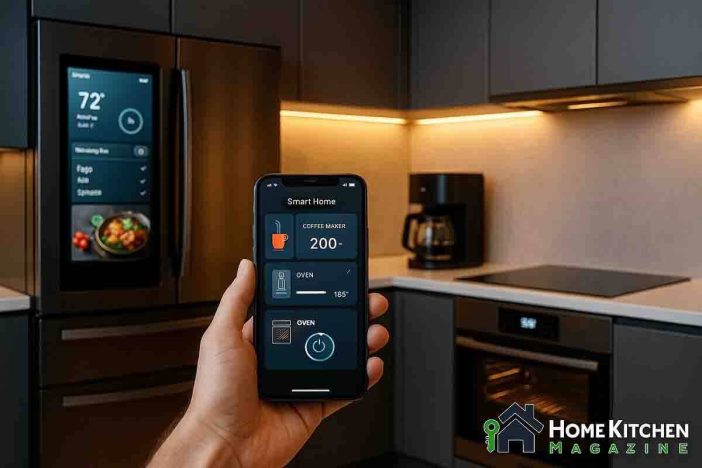
Smart kitchen appliances have moved well beyond novelty features. Connected refrigerators, ovens, dishwashers, multicookers, and smaller cooking devices can now provide remote monitoring, automated cooking programs, maintenance alerts, and energy-management features.
But adding Wi-Fi or an app does not automatically make an appliance a better purchase. The more important questions are whether the connected features solve a real problem, whether the appliance will remain supported, how easy it is to repair, and whether the additional cost delivers meaningful long-term value.
This guide compares 10 types of smart kitchen appliances worth considering in 2026, focusing on practical usefulness, compatibility, energy considerations, support, repairability, and ownership value rather than technology for its own sake.
| Appliance Type | Smart Feature That Matters | Best For | Main Buying Consideration |
|---|---|---|---|
| Smart refrigerator | Inventory and temperature monitoring | Large households | Software support and repair cost |
| Smart oven | Remote monitoring and guided cooking | Frequent home cooks | Safety controls and app support |
| Smart microwave | Scan-to-cook and presets | Convenience-focused kitchens | Whether smart functions add real value |
| Smart multicooker | Scheduling and guided programs | Multi-purpose cooking | Capacity and replacement parts |
| Smart dishwasher | Cycle monitoring and diagnostics | Busy households | Water efficiency and serviceability |
| Smart kettle | Temperature control and scheduling | Tea and coffee drinkers | Standby energy use |
| Smart sous vide cooker | Precise remote temperature control | Precision cooking | Connectivity reliability |
| Smart thermometer | Remote temperature monitoring | Meat and oven cooking | Wireless range and sensor accuracy |
| Smart blender | Automated programs | Frequent blending | Durability and jar replacement cost |
| Connected countertop oven | Guided and automated cooking | Small kitchens | Ecosystem and software dependency |
Smart appliances are only one part of building a more functional kitchen. Our Kitchen Systems, Appliances & Efficiency guide covers appliance reliability, electrical planning, plumbing, ventilation, and long-term kitchen performance.
What Are Smart Kitchen Appliances?
Smart kitchen appliances are devices embedded with technology such as Wi-Fi, Bluetooth, sensors, or voice-assist compatibility. Smart kitchen appliances use connected technologies such as Wi-Fi, Bluetooth, sensors, software, or cloud services to add functions such as remote monitoring, alerts, automation, diagnostics, or integration with other home systems.
From smart refrigerators that track expiration dates to intelligent ovens that cook your food based on internal sensors, these devices offer automation, efficiency, and convenience like never before.
Are Smart Kitchen Appliances Worth It?
Here are five powerful benefits of upgrading your kitchen:
1. Convenience & Remote Control
Turn on your coffee maker from bed or preheat your oven on your commute home—no more waiting around in the kitchen.
2. Energy Efficiency
Smart kitchen appliances use optimized settings and real-time feedback to reduce electricity and water usage, saving you money.
3. Enhanced Food Safety
Smart refrigerators can notify you when food is about to expire or when the door has been left open.
4. Customization
Personalized user profiles allow your appliance to remember your favorite settings, like preferred coffee strength or cooking temperature.
5. Integration with Smart Homes
Most devices sync seamlessly with your existing smart home ecosystem for voice and app control.
These benefits vary substantially by appliance and model, so connected functionality should be evaluated as one part of the buying decision rather than assumed to provide automatic savings.
10 Smart Kitchen Appliances to Consider in 2026
The most useful smart kitchen appliances are not necessarily the ones with the longest feature lists. A connected feature is valuable when it makes an everyday task easier, improves monitoring, helps reduce waste, simplifies maintenance, or gives you better control over how an appliance operates.
Here are 10 types of smart kitchen appliances worth considering in 2026, along with the practical benefits and potential drawbacks to evaluate before buying.
1. Smart Refrigerator
A smart refrigerator combines traditional food storage with connected features such as temperature monitoring, door alerts, inventory tools, internal cameras, maintenance notifications, and integration with mobile apps.
Some models allow you to check refrigerator conditions remotely or receive an alert when a door has been left open. More advanced systems may also help track food, create shopping lists, or connect with other appliances in the same ecosystem.
What it does:
Keeps food refrigerated while adding connected monitoring, alerts, and management features.
Useful smart features:
- Remote temperature monitoring
- Door-open notifications
- Internal cameras on selected models
- Maintenance and filter reminders
- Energy-use information
- App-based settings
- Smart-home integration
Best suited for:
Large households, people who frequently stock fresh food, and homeowners who value remote monitoring and appliance notifications.
Potential drawback:
Smart refrigerators can be significantly more complex than conventional models. Displays, cameras, sensors, connectivity modules, and electronic control systems may add repair costs without improving the refrigerator’s core cooling performance.
Before buying:
Compare refrigerator capacity, temperature performance, energy efficiency, warranty coverage, repair availability, replacement-part availability, and software support. Choose the refrigerator for its core refrigeration quality first and its smart functions second.
2. Smart Oven
Smart ovens can add remote monitoring, connected temperature controls, cooking notifications, guided recipes, automated cooking modes, and integration with companion apps.
One of the most practical advantages is the ability to monitor cooking progress without repeatedly checking the oven. Some models can also send notifications when preheating is complete or when a cooking program reaches a particular stage.
What it does:
Combines conventional oven functions with connected monitoring, automation, and cooking assistance.
Useful smart features:
- Preheat notifications
- Remote monitoring
- Connected temperature controls
- Guided cooking programs
- Cooking timers and alerts
- Food-temperature integration on selected models
- Maintenance or diagnostic notifications
Best suited for:
Frequent home cooks, busy households, and people who regularly use an oven for longer cooking sessions.
Potential drawback:
Not every connected feature provides meaningful value. If you rarely use app controls, automated programs, or remote notifications, the additional cost may be difficult to justify.
Before buying:
Check cooking performance, usable capacity, temperature accuracy, safety controls, cleaning method, warranty, repair support, and whether essential oven functions remain available without an internet connection.
3. Smart Countertop Oven
A smart countertop oven can combine several cooking functions in one compact appliance. Depending on the model, those functions may include baking, roasting, reheating, air frying, toasting, broiling, and automated cooking programs.
Connected versions may provide app-based controls, recipe guidance, cooking notifications, or automatic adjustment of time and temperature.
What it does:
Provides multiple cooking functions in a countertop format with optional automation and connected controls.
Useful smart features:
- Guided cooking programs
- Cooking notifications
- App-assisted settings
- Automatic time and temperature adjustment
- Multi-stage cooking programs
- Preset cooking modes
Best suited for:
Small households, compact kitchens, renters, and people who want several cooking functions without purchasing multiple countertop appliances.
Potential drawback:
Countertop ovens consume valuable worktop space, and some smart features depend heavily on manufacturer software.
Before buying:
Measure available counter space carefully. Compare interior cooking capacity, ventilation requirements, electrical demand, cleaning convenience, replacement accessories, and whether the appliance performs well without its connected features.
4. Smart Microwave
A smart microwave adds connected functions to one of the most common kitchen appliances. Features may include app controls, voice-assistant compatibility, barcode or scan-to-cook functions, automated presets, and cooking notifications.
The biggest benefit is convenience, particularly when smart functions simplify repetitive reheating or cooking tasks.
What it does:
Uses connected controls and automated programs to simplify microwave cooking and reheating.
Useful smart features:
- App-based controls
- Cooking notifications
- Voice commands on compatible systems
- Automated cooking presets
- Scan-to-cook functionality on selected models
- Multi-stage cooking controls
Best suited for:
Households that rely heavily on microwave cooking, reheating, or prepared foods.
Potential drawback:
Microwaves already provide substantial convenience without connectivity. For many buyers, adding smart controls may provide only a small improvement over a reliable conventional microwave.
Before buying:
Prioritize heating consistency, capacity, power levels, controls, safety, service support, and price before considering app connectivity.
5. Smart Multicooker
Smart multicookers combine several cooking methods in one appliance. Depending on the device, they may support pressure cooking, slow cooking, steaming, rice cooking, sautéing, warming, and other programs.
Connected models can provide guided recipes, cooking progress updates, program controls, and notifications through a smartphone app.
What it does:
Combines several cooking methods with automated programs and connected monitoring.
Useful smart features:
- Guided recipes
- Cooking progress notifications
- Program selection
- Automated cooking settings
- Delayed or scheduled cooking where safely supported
- Recipe libraries
Best suited for:
Busy households, meal-prep users, and kitchens where one multifunction appliance can replace several individual devices.
Potential drawback:
A long list of cooking modes can make an appliance look more versatile than it actually is. Some users may regularly use only two or three functions.
Before buying:
Choose an appropriate capacity and examine the cooking functions you will realistically use. Also check replacement seals, inner pots, valves, accessories, warranty terms, and local availability of spare parts.
6. Smart Dishwasher
Smart dishwashers may offer remote cycle monitoring, maintenance alerts, leak notifications, automatic detergent features, cycle recommendations, diagnostics, and energy or water-use information.
The most useful connected features tend to be monitoring and maintenance rather than remote control itself.
What it does:
Automates dishwashing while adding connected cycle monitoring, diagnostics, and maintenance features.
Useful smart features:
- Cycle-status notifications
- Maintenance alerts
- Leak notifications
- Remote diagnostics
- Energy or water-use monitoring
- Detergent reminders
- Downloadable or customized wash cycles on selected models
Best suited for:
Busy households, frequent dishwasher users, and homeowners who value maintenance notifications and appliance diagnostics.
Potential drawback:
Connectivity cannot compensate for poor cleaning performance, inefficient rack design, excessive noise, or weak reliability.
Before buying:
Compare cleaning performance, water and energy efficiency, noise level, rack flexibility, filter maintenance, warranty coverage, repair support, and replacement-part availability.
7. Smart Kettle
A smart kettle adds precise temperature control, scheduling, keep-warm functions, and app-based monitoring to a relatively simple kitchen appliance.
Temperature control can be particularly useful for people who regularly prepare different types of tea, pour-over coffee, baby formula, or other drinks that benefit from controlled water temperature.
What it does:
Heats water with additional control over temperature, timing, and monitoring.
Useful smart features:
- Adjustable temperature settings
- Keep-warm mode
- Scheduled heating
- App monitoring
- Temperature notifications
- Preset beverage temperatures
Best suited for:
Tea and coffee drinkers who regularly benefit from precise water temperatures.
Potential drawback:
A conventional variable-temperature kettle can provide many of the same practical benefits without Wi-Fi, an app, or cloud connectivity.
Before buying:
Compare temperature accuracy, heating speed, capacity, safety shutoff, minimum water level, cleaning convenience, standby behavior, and whether the smart functions provide enough additional value.
8. Smart Sous Vide Cooker
Sous vide cooking relies on precise water-temperature control, making it one kitchen category where connected monitoring can provide a practical benefit.
A smart sous vide cooker may allow you to monitor water temperature, receive cooking alerts, access cooking guides, and manage compatible cooking programs from a mobile device.
What it does:
Maintains a precise water-bath temperature for controlled low-temperature cooking.
Useful smart features:
- Remote temperature monitoring
- Cooking timers
- Completion alerts
- Guided cooking programs
- Recipe integration
- Temperature adjustment through an app
Best suited for:
People interested in precision cooking, meal preparation, and repeatable cooking results.
Potential drawback:
Sous vide cooking requires additional equipment such as suitable containers and food-safe bags, and the process can take considerably longer than conventional cooking.
Before buying:
Check temperature accuracy, heating capacity, minimum and maximum water levels, app reliability, physical controls, cleaning requirements, and whether the cooker remains usable if connectivity is unavailable.
9. Smart Meat Thermometer
A connected meat thermometer is one of the simpler smart kitchen devices because connectivity directly supports its main purpose: monitoring food temperature without standing beside the oven or grill.
Wireless models may transmit temperature information to an app or dedicated receiver and can alert you when food approaches a target temperature.
What it does:
Monitors internal food temperature and sends cooking progress or temperature alerts.
Useful smart features:
- Remote temperature monitoring
- Target-temperature alerts
- Multiple-probe monitoring
- Cooking timers
- Temperature history
- Guided doneness settings
Best suited for:
People who frequently roast, grill, smoke, or cook meat and want more consistent temperature monitoring.
Potential drawback:
Wireless range, battery life, probe durability, and connection stability can vary significantly between devices.
Before buying:
Look for suitable temperature ranges, probe durability, charging or battery requirements, wireless range, app support, replacement probes, and cleaning instructions. A dependable temperature reading is more important than an extensive list of software features.
10. Smart Blender
Smart blenders may include automated blending programs, app-based recipes, ingredient guidance, self-adjusting cycles, timers, and other forms of cooking assistance.
Automation can be helpful for users who regularly make smoothies, soups, sauces, nut butters, or other recipes where repeatable settings are useful.
What it does:
Automates common blending tasks and may provide connected recipes or program controls.
Useful smart features:
- Automated blending programs
- Timed cycles
- Recipe guidance
- App integration
- Automatic program adjustment on selected models
- Maintenance notifications
Best suited for:
People who blend frequently and are likely to use automated programs on a regular basis.
Potential drawback:
Blending quality depends more on motor performance, blade design, container durability, and reliability than on connectivity.
Before buying:
Compare motor performance, usable capacity, noise, jar materials, replacement parts, warranty, cleaning requirements, and long-term durability. Treat smart features as an additional convenience rather than the primary reason to choose a blender.
Which Smart Kitchen Appliance Should You Buy First?
You do not need to build a fully connected kitchen at once.
A better approach is to start with the appliance where connectivity solves a problem you already have.
For example:
- Choose a smart oven if cooking notifications and remote monitoring would make long cooking sessions easier.
- Consider a smart refrigerator if temperature, door, and maintenance alerts provide meaningful value to your household.
- A smart dishwasher may be useful if you value cycle monitoring, maintenance alerts, and diagnostics.
- A smart thermometer can provide immediate practical value if you frequently roast or grill food.
- A smart kettle may make sense if precise water temperature is part of your daily tea or coffee routine.
- A smart multicooker can be useful when guided cooking and multifunction capability reduce the number of appliances you need.
The key question is not whether an appliance is smart. It is whether the connected feature will be used often enough to justify the additional cost and complexity.
Before buying, compare the smart appliance with a conventional alternative based on core performance, energy and water consumption where relevant, reliability, warranty coverage, repairability, software support, and expected ownership costs.
A simpler appliance that performs its primary job reliably for many years may ultimately provide better value than a highly connected appliance whose extra features are rarely used.
How to Choose a Smart Kitchen Appliance
A smart appliance should make everyday kitchen tasks easier, safer, more efficient, or easier to monitor. Connectivity alone is not a good reason to pay more for an appliance.
Before buying, compare the smart model with a conventional alternative and consider how often you will actually use its connected features. The following factors can help you decide whether the additional technology provides meaningful long-term value.
1. Start With the Problem You Want to Solve
Begin with a practical need rather than a feature list.
Ask yourself what you want the appliance to improve. Do you need better temperature monitoring? Cooking notifications? Maintenance alerts? More precise control? Energy-use information? Or simply a way to automate a repetitive task?
For example, a connected meat thermometer can be useful if you regularly roast or grill food and want temperature alerts without repeatedly checking the oven. A smart dishwasher may make more sense if maintenance notifications and cycle monitoring would be useful in your household.
If you cannot identify a recurring problem that the smart feature would solve, a conventional appliance may offer better value.
2. Check Compatibility Before You Buy
Smart appliances often depend on apps, Wi-Fi networks, Bluetooth, cloud services, or a particular smart-home ecosystem.
Before purchasing, check whether the appliance is compatible with the devices and systems you already use.
Consider:
- Android and iOS compatibility
- Wi-Fi requirements
- Bluetooth support
- Amazon Alexa compatibility
- Google Home compatibility
- Apple ecosystem support, where available
- Whether the appliance requires the manufacturer’s own app
- Whether multiple household members can access the appliance
- Whether important functions still work without an internet connection
Avoid choosing an appliance primarily because it works with a voice assistant or app that you rarely use.
Compatibility is especially important if you plan to connect several appliances. Staying within one well-supported ecosystem can sometimes make setup and daily management easier, but it should not outweigh appliance quality, reliability, or serviceability.
3. Evaluate Software and Long-Term Support
Unlike a conventional appliance, a connected appliance may depend partly on software.
That means long-term ownership is influenced not only by mechanical durability but also by whether the manufacturer continues to maintain its app, security updates, cloud services, and connected features.
Before buying, investigate questions such as:
- Does the manufacturer regularly update its app?
- Can the appliance receive firmware updates?
- Are basic functions available without the app?
- What happens if the manufacturer’s cloud service is unavailable?
- Does the appliance remain usable if your internet connection fails?
- Is account registration required?
- Are any features locked behind a subscription?
- Has the manufacturer provided a clear support policy for connected products?
The most resilient smart appliance is one that continues to perform its essential function even if its connected services become unavailable.
For major appliances expected to remain in a home for many years, this is particularly important. A refrigerator or dishwasher may have a much longer useful life than the smartphone or software ecosystem used to control it.
4. Compare Energy and Water Performance
Do not assume that an appliance is energy efficient simply because it is marketed as “smart.”
Connected features can help with monitoring, scheduling, diagnostics, or energy management, but actual electricity and water consumption still depend on the appliance itself, its efficiency, settings, capacity, and how it is used.
When applicable, compare:
- Estimated annual energy consumption
- Water consumption
- Energy-efficiency certifications
- Eco or energy-saving modes
- Standby power consumption
- Capacity relative to your household needs
- Energy-monitoring features
- Automatic shutoff or scheduling features
For appliance categories covered by ENERGY STAR, certification can provide a useful benchmark when comparing efficiency.
However, efficiency should be evaluated together with size and usage. Buying an oversized appliance or using inefficient settings can reduce potential savings even when the appliance itself is relatively efficient.
5. Consider Repairability and Replacement Parts
Smart appliances contain additional sensors, displays, wireless modules, electronic boards, and other components that can increase complexity.
Before buying an expensive connected appliance, consider how easy it will be to maintain and repair.
Check:
- Availability of authorized service centers
- Availability of replacement parts
- Cost of common repairs
- Availability of replacement accessories
- Whether batteries or sensors can be replaced
- Whether electronic modules can be serviced separately
- Manufacturer support in your area
- Expected lifespan of the appliance category
A smart feature is less valuable if repairing it later costs a large percentage of the appliance’s replacement price.
For major appliances, long-term reliability can be more valuable than having the largest number of connected features.
You can also use our guide to kitchen appliance lifespan when considering how repair, maintenance, and replacement fit into long-term ownership planning.
6. Review Warranty Coverage and Customer Support
Warranty coverage deserves extra attention when purchasing connected appliances because hardware and software components may be covered differently.
Before purchasing, review:
- Length of the manufacturer’s warranty
- Parts and labor coverage
- Coverage for electronic control boards
- Coverage for displays and connected components
- Exclusions
- Requirements for authorized installation or servicing
- Availability of customer support
- Extended warranty options
Do not assume that every connected feature will be covered for the same period as the appliance itself.
Also consider whether the manufacturer has an established service network. A technically impressive appliance can become inconvenient if qualified repair service or replacement parts are difficult to obtain.
7. Calculate the Smart Premium
Compare the price of the smart appliance with a similar conventional model from the same product category.
The difference between those prices is effectively the smart premium you are paying for connectivity, automation, software, sensors, or other advanced features.
Then ask:
Will I use these additional features often enough to justify the extra cost?
For example, paying more may make sense if remote temperature monitoring prevents food loss, diagnostics help identify maintenance problems, or automation saves meaningful time every week.
The premium may be harder to justify if the connected feature only replaces a task that already takes a few seconds.
Remember to consider more than the purchase price. Long-term ownership may also include:
- Installation
- Electricity or water use
- Maintenance
- Replacement parts
- Repairs
- Subscription fees, if any
- Smart-home accessories
- Eventual replacement
The appliance with the lowest purchase price is not always the cheapest to own, and the appliance with the most features is not necessarily the best value.
8. Make Sure the Core Appliance Is Good First
A refrigerator still needs to refrigerate reliably. An oven must maintain accurate temperatures. A dishwasher needs to clean effectively. A blender needs sufficient motor performance and durability.
Smart functionality should come after these fundamentals.
Evaluate the appliance based on:
- Core performance
- Reliability
- Capacity
- Ease of cleaning
- Safety
- Noise, where relevant
- Energy and water use
- Warranty
- Repairability
- Replacement-part availability
Only after these requirements are satisfied should connected functionality become a deciding factor.
A well-built conventional appliance can be a better purchase than a poorly performing smart appliance with an impressive app.
9. Consider Privacy and Account Requirements
Connected appliances can collect operational information and may require user accounts, internet connectivity, or mobile apps.
Before connecting an appliance to your home network, review what information the manufacturer collects and what controls are available.
Consider:
- Whether an account is mandatory
- What permissions the app requests
- Whether optional data sharing can be disabled
- Whether the appliance supports software and security updates
- Whether household data is stored remotely
- Whether the appliance can be reset before resale or disposal
You do not need to avoid connected appliances because they collect data, but understanding the requirements before purchase helps prevent surprises later.
10. Choose Features You Will Actually Use
Feature lists can make smart appliances look impressive, but unused features provide little real value.
Prioritize capabilities that fit your normal routine.
Useful examples may include:
- Door-open alerts for a refrigerator
- Cooking-temperature alerts
- Dishwasher maintenance notifications
- Remote appliance-status monitoring
- Energy-use information
- Precise kettle temperature controls
- Automatic shutoff
- Diagnostic alerts
Features such as elaborate touchscreens, large recipe libraries, voice controls, or complex automation may be valuable to some households but unnecessary to others.
A useful rule is simple: if you cannot explain when you would use a smart feature during a normal week, do not pay a large premium for it.
A Simple Smart Appliance Buying Checklist
Before making a final decision, ask:
- Does this appliance solve a problem I actually have?
- Would I buy it even without the smart features?
- Are its core appliance functions reliable?
- Is it compatible with my phone and smart-home system?
- Will essential functions work without internet access?
- Does the manufacturer provide ongoing software support?
- Are energy and water consumption reasonable?
- Can it be repaired locally?
- Are replacement parts available?
- Is the warranty adequate?
- Are there subscriptions or recurring costs?
- Am I comfortable with its privacy and account requirements?
- Will I realistically use the connected features?
- Is the smart version worth the price difference?
If several answers are uncertain, compare the appliance with a simpler conventional alternative before buying.
The best smart kitchen appliance is not necessarily the most advanced one. It is the appliance that performs its primary job reliably while adding connected features that you will genuinely use throughout its useful life.
Smart Appliance Ownership Costs to Consider
The purchase price is only one part of what a smart kitchen appliance may cost over its useful life.
Connected appliances can include additional electronics, sensors, wireless modules, displays, software, and cloud-based services. These features may provide useful convenience, but they can also introduce costs that are easy to overlook when comparing products at the store.
Before buying, consider the total cost of ownership, not just the price shown on the product page.
Purchase Price
Smart versions of refrigerators, ovens, dishwashers, kettles, multicookers, and other appliances may cost more than comparable conventional models.
The difference in price can be thought of as the smart premium: the additional amount you are paying for features such as connectivity, automation, remote monitoring, diagnostics, or software integration.
Before paying that premium, ask:
- Which smart features will I actually use?
- How often will I use them?
- Would a conventional appliance perform the main job just as well?
- Does the smart functionality provide enough convenience or control to justify the additional price?
A higher purchase price can make sense when the additional functionality solves a recurring problem. It may provide less value when most connected features are rarely used.
Installation Costs
Some kitchen appliances can be installed easily, while others may require professional installation.
Potential installation costs can include:
- Electrical work
- Dedicated circuits or outlets
- Plumbing connections
- Water lines
- Ventilation
- Gas connections
- Cabinet modifications
- Appliance delivery and installation fees
- Smart-home setup or network configuration
Large appliances such as ovens, ranges, refrigerators, and dishwashers deserve particular attention because installation requirements can significantly affect the true initial cost.
Before buying, confirm that the appliance is compatible with your existing kitchen infrastructure.
Energy and Water Costs
Smart features do not automatically make an appliance more efficient.
Connected functions may help you monitor energy use, manage schedules, receive alerts, or optimize certain settings, but actual utility costs depend primarily on appliance efficiency, capacity, operating habits, and frequency of use.
To turn those differences into money rather than marketing claims, use our kitchen appliance electricity cost guide to convert measured energy use or appropriate wattage data into monthly and yearly cost using your own electricity rate.
When comparing appliances, consider:
- Estimated annual electricity consumption
- Water consumption, where applicable
- Energy-saving modes
- Standby power consumption
- Appliance size and capacity
- Frequency of use
- Energy-efficiency certifications where applicable
A connected appliance that consumes substantially more electricity or water than an efficient conventional alternative may cost more to operate over time.
For categories covered by recognized efficiency programs, certification information can provide a useful benchmark when comparing models.
Maintenance Costs
Every appliance requires some degree of maintenance.
Depending on the appliance, recurring maintenance may involve:
- Replacing water filters
- Cleaning air filters
- Descaling
- Cleaning sensors
- Replacing seals or gaskets
- Cleaning condenser coils
- Replacing dishwasher filters
- Maintaining probes and accessories
- Software and firmware updates
Small maintenance tasks can help appliances operate properly and may reduce the likelihood of more expensive repairs later.
Before buying, check the manufacturer’s maintenance recommendations and the cost and availability of consumable parts.
Repair Costs
Repairability is particularly important for connected appliances.
Smart models may contain additional components such as:
- Electronic control boards
- Touchscreen displays
- Wi-Fi modules
- Bluetooth modules
- Cameras
- Sensors
- Specialized control panels
These components can add functionality, but they can also add complexity when something fails.
Before buying a major smart appliance, consider:
- Availability of authorized repair services
- Availability of replacement parts
- Typical cost of common repairs
- Whether electronic components can be replaced separately
- Whether the appliance can continue operating if a smart component fails
For long-term ownership planning, our guide to kitchen appliance lifespan can also help you consider when maintaining or repairing an appliance may make more sense than replacing it.
Replacement Parts and Accessories
Some appliances depend on proprietary parts or accessories.
Examples may include:
- Water filters
- Temperature probes
- Cooking trays
- Inner pots
- Blender jars
- Refrigerator shelves
- Dishwasher racks
- Sensors
- Charging accessories
Before choosing a product, check whether commonly replaced parts are readily available.
An appliance can become expensive to own if simple accessories are difficult to find or unusually costly to replace.
Availability matters even more for appliances expected to remain in service for many years.
Software and Connectivity Costs
Some smart kitchen appliances depend on apps, cloud services, or manufacturer accounts.
In many cases these services are included, but buyers should still check whether any functionality requires:
- A paid subscription
- Premium app features
- Cloud storage
- Additional smart-home hardware
- A compatible hub
- Ongoing internet access
Also consider what happens if the manufacturer eventually discontinues an app or online service.
Ideally, the appliance should continue performing its essential function even if its connected features become unavailable.
Warranty and Extended Coverage
Warranty coverage can affect the financial risk of owning a more complex appliance.
Before purchasing, review:
- Warranty length
- Parts coverage
- Labor coverage
- Coverage for electronic components
- Coverage for displays and sensors
- Service-call costs
- Warranty exclusions
- Availability of extended coverage
An extended warranty should not automatically be purchased simply because an appliance is smart.
Instead, compare the warranty cost with the appliance price, expected repair costs, manufacturer reliability, and what is already included in the standard warranty.
Subscription Fees
Not every smart appliance requires a subscription, but some connected products or related services may offer features through recurring plans.
Before purchasing, check whether any advertised capability requires ongoing payment.
Ask:
- Are core features free?
- Are advanced features subscription-based?
- Can you continue using the appliance normally without paying?
- Could subscription pricing change later?
A small monthly fee can become a meaningful ownership cost if the appliance remains in use for many years.
Network and Smart-Home Requirements
Connected appliances may also depend on equipment outside the appliance itself.
Possible requirements include:
- Reliable home Wi-Fi
- A compatible router
- Smartphone or tablet access
- Smart speakers
- Smart-home hubs
- Additional sensors or accessories
You may already own this equipment, in which case the additional cost can be minimal.
However, avoid buying extra smart-home hardware unless it provides enough practical value to justify the expense.
The Cost of Early Replacement
One of the largest appliance expenses is not maintenance or electricity. It is replacing the appliance earlier than expected.
A smart appliance with impressive technology may still provide poor long-term value if it becomes difficult to repair, loses software support, or suffers from expensive electronic failures.
This is why durability and serviceability deserve as much attention as connected functionality.
If two appliances meet your needs equally well, the model with better parts availability, stronger service support, and a longer expected useful life may provide better overall value even if its initial price is slightly higher.
How to Compare Total Ownership Cost
You do not need a complicated calculation to make a better purchasing decision.
For each appliance you are considering, compare these factors:
**Purchase price
- installation
- estimated energy and water costs
- routine maintenance
- expected repair costs
- replacement parts
- subscriptions or connected-service fees
- eventual replacement cost**
Then consider how many years you realistically expect to use the appliance.
This provides a more useful comparison than purchase price alone.
When Paying More Can Make Sense
A more expensive smart appliance can still provide good value when its additional features deliver practical benefits throughout its useful life.
Paying more may make sense when a feature:
- Prevents food loss
- Provides useful safety or temperature alerts
- Helps identify maintenance problems early
- Improves cooking consistency
- Reduces repetitive tasks
- Helps manage energy or water consumption
- Makes the appliance significantly easier to use
- Replaces the need for another appliance or device
The key is repeated use.
A feature that saves time or prevents problems every week can provide meaningful value. A feature that is demonstrated once and then forgotten generally cannot.
Long-Term Value Matters More Than the Feature List
When comparing smart kitchen appliances, avoid judging value by the number of features advertised.
A better question is:
How much useful service will this appliance provide for the total amount I will spend owning it?
A simpler appliance with reliable performance, readily available parts, reasonable energy consumption, and dependable repair support can offer better long-term value than a feature-rich appliance that is expensive to maintain.
Smart functionality is most valuable when it improves an already good appliance—not when it compensates for poor performance, weak durability, or high ownership costs.
Connectivity adds another layer of electronics and software to appliance ownership, but basic durability still matters. See our guide to kitchen appliance lifespan for a broader framework for planning repair and replacement.
Real-World Scenario: Transforming a Small Kitchen
Imagine this: You live in a small apartment and want to save time and space.
Solution?
- Use a smart air fryer for healthy meals.
- Get a multi-cooker like the Instant Pot Pro Plus to replace 7 different appliances.
- Add a compact smart dishwasher to reclaim your evenings.
A small connected kitchen does not require replacing every appliance at once. Starting with one frequently used device makes it easier to evaluate whether the connected features actually save enough time, energy, or effort to justify further upgrades.
Are Smart Kitchen Appliances Worth Buying?
Smart kitchen appliances can be worthwhile when their connected features solve a recurring problem: monitoring food temperatures, checking appliance status remotely, automating repetitive cooking tasks, diagnosing problems, or managing energy use.
The strongest purchase is not necessarily the appliance with the most connected features. It is the one that combines useful functionality with dependable core performance, reasonable ownership costs, repair support, and a realistic useful life.
Before buying, compare the smart version with a conventional alternative and decide whether you would regularly use the extra functionality. If the answer is no, a simpler appliance may still provide better long-term value.