Water damage is rarely about surprise.
It’s about neglect measured in months.
A supply line installed during renovation. A dishwasher hose left unchecked. A shut-off valve that hasn’t been turned in years. Nothing fails immediately. It fails slowly—until one day it doesn’t.
In reviewing kitchen leak cases, the same pattern appears repeatedly: homeowners don’t lack awareness. They lack timing.
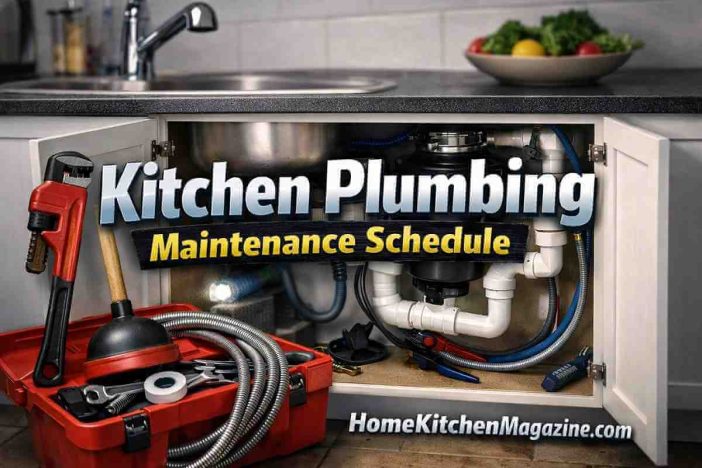
A structured kitchen plumbing maintenance schedule transforms plumbing from reactive repair into predictable system management.
This guide provides a practical 12-month preventive calendar you can actually follow.
Why A Kitchen Plumbing Maintenance Schedule Matters
Kitchens concentrate:
- Pressurized supply lines
- Appliance connectors
- Drain assemblies
- Shut-off valves
- Vibration zones
- Temperature fluctuations
Unlike visible surfaces, plumbing components degrade silently.
A structured schedule reduces:
- Sudden hose rupture
- Slow drain leaks
- Corrosion-related failure
- Emergency plumbing costs
- Insurance complications
This framework builds on the audit principles outlined in Kitchen Leak Risk Audit Checklist: 15 Points Homeowners Miss Every Year, turning inspection into calendar discipline.
The 12-Month Kitchen Plumbing Maintenance Calendar
Below is a realistic, homeowner-friendly structure. No overcomplication—just consistent rhythm.
January – Pressure & Baseline Month
- Test household water pressure (target: 40–60 psi)
- Inspect braided stainless supply lines for corrosion
- Confirm no cabinet floor softness
Why January?
New year = system reset.
Pressure control directly impacts lifespan discussed in PEX vs Copper vs Braided Stainless Supply Lines: Which Is Safest for Kitchens?
February – Drain Flow Review
- Run hot water through sink drains
- Inspect P-trap connections
- Check for slow drainage or odors
Drain issues are early indicators of moisture risk.
March – Dishwasher Inspection
- Inspect supply line and drain hose
- Confirm high-loop installation
- Check for moisture under unit
Dishwashers are high-vibration leak points.
April – Leak Detection System Test
If installed:
- Test moisture sensors
- Replace batteries if needed
- Confirm app notifications work
As explained in Smart Kitchen Water Monitoring Systems: Do They Really Prevent Major Damage?, detection is only useful if operational.
May – Refrigerator Line Check
- Inspect ice maker supply line
- Check compression fittings
- Replace plastic tubing if present
Ice maker lines are often overlooked until failure.
June – Cabinet Interior Audit
- Empty under-sink storage
- Inspect back wall penetration points
- Check shut-off valve corrosion
This aligns with structured preventive inspection from the Home Safety, Maintenance & Prevention hub.
July – Mid-Year Connector Review
- Check braided stainless crimp collars
- Inspect for rust or mineral buildup
- Document connector age
If connectors are older than 7 years, schedule replacement.
Reference: How Long Do Braided Stainless Steel Supply Lines Really Last?
August – Shut-Off Valve Function Test
- Turn valves gently on/off
- Confirm smooth operation
- Avoid forcing stuck valves
Nonfunctional valves delay emergency response.
September – Drain Seal & Sink Assembly Check
- Inspect sink basin seal
- Tighten slip nuts gently
- Look for staining around joints
Slow drain leaks are common September findings after heavy summer usage.
October – Appliance Vibration Inspection
- Ensure hoses aren’t rubbing against sharp edges
- Confirm connectors aren’t twisted
- Check dishwasher alignment
Vibration accelerates wear.
November – Automatic Shut-Off Valve Test (If Installed)
- Test manual override
- Simulate leak detection
- Confirm valve closes fully
Supports guidance in Are Automatic Water Shut-Off Valves Worth It for Kitchens?
December – Annual Full Kitchen Leak Risk Audit
Repeat full 15-point audit from:
Kitchen Leak Risk Audit Checklist
Document findings.
Replace components proactively.
End year with plumbing stability—not uncertainty.
Replacement Timing Integration
Within this 12-month schedule, apply these replacement rules:
- Braided stainless connectors: Every 7 years
- Plastic supply lines: Replace immediately
- Pressure regulators: Inspect annually
- Leak detector batteries: Replace annually
Preventive replacement costs less than repair exposure.
The Risk Reduction Formula
Kitchen plumbing stability depends on:
Probability × Exposure Time × Detection Speed
This maintenance schedule reduces:
- Probability (inspection + replacement)
- Exposure (shut-off testing)
- Detection delay (sensor testing)
Layered prevention changes outcomes dramatically.
Insurance & Property Value Impact
Documented maintenance:
- Improves inspection confidence
- Reduces insurance claim severity
- Signals responsible ownership
- Supports stronger resale negotiation
Plumbing stability strengthens property predictability.
That predictability increases perceived value.
A documented maintenance schedule also helps reduce inspection red flags that lower home value, because it shows that plumbing risks were reviewed before they became visible damage.
FAQ – People Also Ask
How Often Should Kitchen Plumbing Be Checked?
Quick checks quarterly. Full audit annually.
Is Annual Replacement Of Supply Lines Necessary?
Not annually—but braided connectors older than 7 years should be replaced.
Can Maintenance Really Prevent Major Leaks?
Yes. Most kitchen water damage originates from aging connectors and untested valves.
Should Maintenance Be Documented?
Yes. Documentation supports inspection credibility and insurance claims.
Reference
Best practices align with:
- InterNACHI plumbing inspection standards
- Insurance Information Institute water damage claim trends
Both emphasize early intervention and routine maintenance.
Wrapping Up: Plumbing Stability Is A Calendar Decision
Kitchen leaks are rarely unpredictable.
They are unscheduled.
A structured kitchen plumbing maintenance schedule converts plumbing from reactive crisis to managed system.
When you:
- Inspect quarterly
- Replace connectors proactively
- Test shut-off systems
- Control pressure
- Document maintenance
you reduce risk dramatically.
Small monthly discipline prevents large annual regret.
Plumbing does not fail randomly.
It fails when ignored.
Control the timing—and you control the outcome.