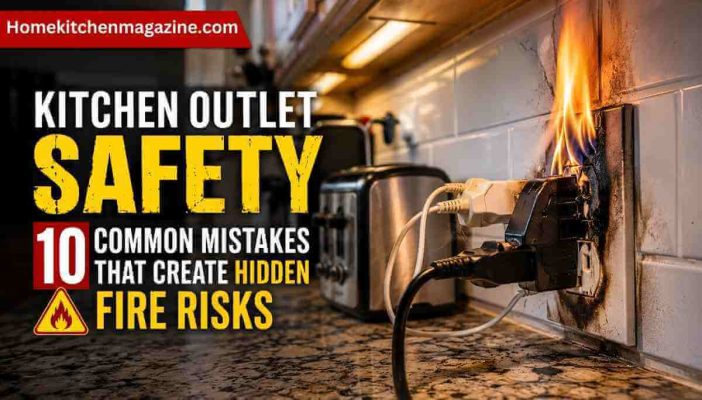
A family had used the same kitchen outlet for years.
The coffee maker worked every morning.
The toaster operated without complaint.
An air fryer was added later.
Nothing appeared unusual.
Months passed before someone noticed the outlet face felt slightly warm.
Eventually, one plug no longer fit tightly.
A faint brown mark appeared around one slot.
Still, everything continued working.
Electrical outlets rarely fail without warning.
More often, they slowly reveal a pattern that homeowners learn to ignore.
A loose plug becomes “normal.”
A warm receptacle becomes “how that outlet has always been.”
A power strip becomes permanent kitchen equipment.
By the time visible damage appears, the problem has usually been developing for much longer.
This guide explains the most common outlet mistakes that quietly increase electrical risk, why they matter, and how homeowners can recognize developing problems before they become expensive—or dangerous.
Safety note: This article explains common electrical safety principles for homeowners. It is not a wiring guide. If an outlet becomes hot, emits a burning odor, shows signs of melting, produces sparks, or repeatedly loses power, discontinue use and have the circuit evaluated by a licensed electrician.
Why Kitchen Outlets Experience More Stress Than Other Rooms
Few rooms place as much continuous demand on electrical receptacles as the kitchen.
Unlike bedrooms or living rooms, kitchens routinely operate several high-wattage appliances throughout the day.
Examples include:
- microwave ovens
- coffee makers
- electric kettles
- air fryers
- toaster ovens
- stand mixers
- countertop induction cookers
Many of these appliances generate heat while simultaneously drawing significant electrical current.
When that demand is concentrated on one receptacle—or repeatedly cycled through aging outlet contacts—wear develops gradually.
The outlet may still appear perfectly functional.
Internally, however, contact pressure, terminal integrity, and heat dissipation may already be changing.
Understanding this gradual deterioration is essential because most outlet-related problems develop progressively rather than suddenly.
The Hidden Relationship Between Heat And Outlet Failure
Homeowners often expect electrical failures to involve sparks or smoke.
In reality, heat usually comes first.
Electrical resistance increases when:
- plug blades fit loosely;
- receptacle contacts wear;
- terminal screws loosen;
- electrical demand repeatedly approaches circuit capacity.
Even modest increases in resistance can produce additional heat.
Over months or years, repeated heating and cooling cycles may accelerate wear inside the receptacle.
That is why outlet safety is not simply about preventing overload.
It is about preventing long-term deterioration caused by everyday use.
Original Editorial Insight: Outlets Age Just Like Appliances
Many homeowners replace refrigerators after fifteen years.
They replace dishwashers when repairs become excessive.
Very few think about the electrical outlets serving those appliances.
Yet receptacles are mechanical devices.
Every insertion and removal of a plug slightly wears the internal contact springs.
Thousands of plug cycles later, those contacts may no longer grip firmly.
The outlet still supplies electricity.
It simply does so less reliably than when it was new.
Recognizing outlets as wear components—not permanent fixtures—is one of the most overlooked aspects of residential electrical maintenance.
10 Common Mistakes That Create Hidden Fire Risks
1. Continuing To Use Loose Outlets
One of the earliest warning signs is a plug that no longer fits securely.
Common symptoms include:
- plugs slipping out easily;
- appliances disconnecting after slight movement;
- plugs wobbling inside the receptacle.
Loose connections increase electrical resistance.
Higher resistance increases heat.
Higher heat accelerates wear.
This cycle often develops long before visible damage appears.
Loose receptacles should never be considered a cosmetic issue.
They represent declining electrical contact quality.
2. Treating Power Strips As Permanent Kitchen Wiring
Power strips are designed primarily for temporary or light-duty use.
Many kitchens gradually evolve into permanent extension systems.
Examples include:
- coffee maker
- microwave
- toaster
- phone charger
all connected to the same strip.
Even if the strip contains surge protection, it cannot increase the electrical capacity of the branch circuit behind the wall.
Permanent dependence on power strips often indicates that receptacle placement or circuit planning no longer matches the kitchen’s electrical demand.
This planning issue is explored further in Kitchen Electrical Load Planning for Modern Homes.
3. Using Extension Cords As Permanent Kitchen Wiring
Extension cords solve temporary problems.
They should not become part of a kitchen’s permanent electrical infrastructure.
Common examples include:
- refrigerator connected through an extension cord;
- countertop microwave powered by a long extension cord;
- air fryer permanently plugged into an extension lead;
- multiple appliances sharing one extension cord.
Extension cords may be exposed to:
- repeated bending;
- cabinet doors;
- moisture;
- heat from cooking appliances;
- physical damage.
They are also more likely to be overloaded when used as substitutes for properly installed receptacles.
If extension cords become a permanent solution, the real issue is usually inadequate outlet placement or insufficient circuit planning.
Our guide Dedicated Kitchen Circuits Explained: Which Appliances Need Their Own Circuit? explains when installing additional branch circuits is a safer long-term solution than adding more extension cords.
4. Ignoring Early Signs Of Outlet Wear
Electrical outlets rarely stop working overnight.
Instead, they often develop subtle warning signs such as:
- slight discoloration;
- loose plug retention;
- occasional buzzing;
- intermittent power;
- visible cracks in the receptacle.
Many homeowners continue using these outlets because they still “work.”
Functionality, however, does not always equal safety.
An outlet that continues supplying electricity while its internal contacts deteriorate may gradually produce increasing heat during normal appliance use.
Recognizing these early changes allows repairs before more significant damage develops.
5. Plugging Multiple High-Wattage Appliances Into One Receptacle
One countertop outlet often becomes the kitchen’s busiest electrical location.
It may serve:
- an electric kettle;
- a toaster;
- an air fryer;
- a coffee maker.
Individually, each appliance may operate safely.
Running several high-demand appliances simultaneously places much greater stress on both the receptacle and the branch circuit.
Repeated heavy loading can contribute to:
- overheating;
- nuisance breaker trips;
- accelerated outlet wear;
- loose internal contacts.
The objective is not simply avoiding breaker trips.
It is reducing repeated thermal stress on electrical components.
This relationship between appliance demand and branch-circuit capacity is explored in Kitchen Circuit Overload Warning Signs: 10 Problems You Should Never Ignore.
6. Allowing Moisture To Reach Receptacles
Water and electricity require careful separation.
Kitchen outlets located near sinks are routinely exposed to:
- splashing water;
- wet hands;
- countertop spills;
- steam;
- cleaning products.
Moisture may not immediately cause visible damage.
Instead, repeated exposure can contribute to:
- corrosion;
- unreliable electrical contact;
- nuisance GFCI trips;
- deterioration of receptacle components.
Homeowners should avoid directing water toward receptacles during cleaning and should investigate unexplained moisture around outlets promptly.
This is one reason modern kitchens often incorporate GFCI protection, discussed in GFCI vs AFCI in Kitchens: What’s the Difference and Why Both Matter?
7. Using Improper Adapters Or Multi-Plug Converters
Small plug adapters appear convenient.
Many homeowners use them to increase the number of available outlets without considering the electrical demand involved.
Examples include:
- cube taps;
- three-way adapters;
- inexpensive multi-plug converters.
While some adapters are listed for appropriate applications, adding more connection points does not increase the capacity of the underlying branch circuit.
Additional plug connections also introduce:
- more mechanical joints;
- greater opportunity for loose electrical contact;
- increased heat if heavily loaded.
Whenever several high-demand appliances require the same outlet, the better long-term solution is evaluating outlet placement and branch-circuit design rather than expanding one receptacle beyond its intended purpose.
8. Ignoring Discoloration, Burn Marks, Or Melted Plastic
A kitchen outlet should never develop visible burn marks.
Even small changes in color deserve attention.
Look for:
- brown or black marks around the receptacle slots;
- yellowing concentrated on one outlet;
- melted plastic;
- warped faceplates;
- scorch marks on plug blades.
These changes often indicate prolonged overheating rather than a single electrical event.
Simply replacing the faceplate will not correct the underlying cause if the receptacle, wiring connection, or appliance remains defective.
When discoloration appears, discontinue using the outlet until it has been properly evaluated.
9. Assuming Every Tripped Outlet Is “Just A Bad GFCI”
Many homeowners immediately blame the GFCI whenever power disappears.
Sometimes the GFCI is functioning exactly as intended.
Repeated trips may indicate:
- moisture intrusion;
- appliance leakage current;
- damaged cords;
- wiring faults;
- deteriorating receptacles.
Replacing the GFCI without identifying why it continues tripping may only remove one symptom while leaving the original electrical problem unresolved.
Understanding how protective devices respond to different hazards is explained in GFCI vs AFCI in Kitchens: What’s the Difference and Why Both Matter?
The safest approach is to determine why protection operated—not simply restore power.
10. Never Inspecting Kitchen Outlets Unless They Stop Working
Many homeowners inspect appliances regularly.
Very few inspect the outlets powering them.
Yet outlets age through:
- repeated plug insertion;
- continuous heating and cooling;
- vibration from heavy appliances;
- humidity;
- normal mechanical wear.
A simple visual inspection once or twice each year can identify early warning signs before they become expensive electrical repairs.
Waiting until an outlet fails completely often means the deterioration has been developing for years.
Original Value Framework: The Outlet Heat Progression Model
Most outlet-related fire hazards develop gradually rather than instantly.
Understanding this progression helps homeowners recognize problems earlier.
Stage 1 — Increased Electrical Demand
The outlet begins serving more appliances than it originally did.
No obvious symptoms appear.
Stage 2 — Contact Wear
Repeated plug insertion and removal gradually weakens internal contact pressure.
The outlet still functions normally.
Stage 3 — Heat Development
Electrical resistance increases.
The receptacle may begin feeling slightly warm after prolonged appliance use.
Minor discoloration or occasional buzzing may appear.
Stage 4 — Progressive Deterioration
Heat accelerates component wear.
Plug retention weakens further.
Internal connections deteriorate.
At this stage, continued use significantly increases electrical risk.
The important observation is that heat is usually a symptom—not the original problem.
Correcting only the visible symptom without identifying the underlying cause may allow deterioration to continue.
Practical Kitchen Outlet Safety Checklist
During routine home maintenance, inspect kitchen outlets for:
✓ Loose plugs that no longer fit securely.
✓ Warm receptacles after normal appliance use.
✓ Cracks, chips, or damaged faceplates.
✓ Brown marks, discoloration, or melting.
✓ Buzzing or crackling sounds.
✓ Frequent breaker or GFCI trips.
✓ Extension cords being used permanently.
✓ Multiple high-wattage appliances sharing one outlet.
✓ Damaged appliance plugs or cords.
✓ Moisture around outlets near sinks.
None of these observations automatically indicates a serious electrical defect.
However, they are valuable warning signs that deserve attention before normal wear develops into equipment damage or a potential fire hazard.
Original Editorial Framework: The Outlet Reliability Pyramid
Instead of thinking only about “safe” or “unsafe,” evaluate outlets using four progressive levels.
Level 1 — Normal Operation
The outlet:
- holds plugs securely;
- remains cool;
- produces no noise;
- shows no visible damage.
Routine inspection is sufficient.
Level 2 — Early Wear
Minor signs begin appearing:
- loose plug retention;
- slight discoloration;
- occasional intermittent connection.
The outlet still functions but should be monitored and scheduled for replacement if deterioration continues.
Level 3 — Functional Deterioration
Multiple warning signs appear:
- warmth;
- buzzing;
- repeated tripping;
- damaged faceplate.
Continued use increases electrical risk.
Professional evaluation is recommended before further operation.
Level 4 — Immediate Safety Concern
Stop using the outlet immediately if you observe:
- burning odor;
- smoke;
- melted plastic;
- visible arcing;
- electrical shock;
- significant heat.
At this stage, the priority is personal safety—not restoring power.
Frequently Asked Questions
Should kitchen outlets become warm during normal use?
A slight temperature increase may occur under heavy load, but outlets should never become noticeably hot, develop odor, discoloration, or visible damage.
How long do electrical outlets typically last?
There is no universal replacement interval.
Outlet lifespan depends on installation quality, usage frequency, electrical demand, environmental conditions, and mechanical wear. Receptacles that become loose or damaged should be evaluated regardless of age.
Is it safe to use a power strip in the kitchen?
Power strips may be appropriate for temporary, light-duty applications when used according to the manufacturer’s instructions.
They should not be relied upon as a permanent solution for high-wattage kitchen appliances or to compensate for inadequate outlet placement.
Can a loose plug create a fire risk?
Potentially, yes.
Loose electrical contact can increase resistance, which may generate additional heat during appliance operation. Continued use may accelerate receptacle deterioration.
Reference
For additional information on residential outlet safety and electrical fire prevention, consult guidance published by:
- National Fire Protection Association (NFPA)
- Electrical Safety Foundation International (ESFI)
- U.S. Consumer Product Safety Commission (CPSC)
- Appliance manufacturer installation manuals
- Local electrical authorities and licensed electricians
Because electrical requirements vary by jurisdiction, always follow the regulations adopted where the installation is located.
Kitchen Outlet Safety Is Really About Managing Heat
Most outlet-related electrical failures begin quietly.
Not with sparks.
Not with smoke.
With heat.
Heat generated by loose contacts.
Heat produced by repeated heavy appliance use.
Heat created by years of gradual mechanical wear.
That is why kitchen outlet safety is not simply about replacing damaged receptacles.
It is about recognizing the small changes that appear long before visible failure occurs.
A kitchen where outlets remain cool, secure, and properly matched to appliance demand is not only more reliable—it is also better prepared for years of safe daily use.
This article is part of our Kitchen Systems, Appliances & Efficiency Hub, where we explore appliance reliability, electrical planning, preventive maintenance, and long-term kitchen safety through one connected system.