
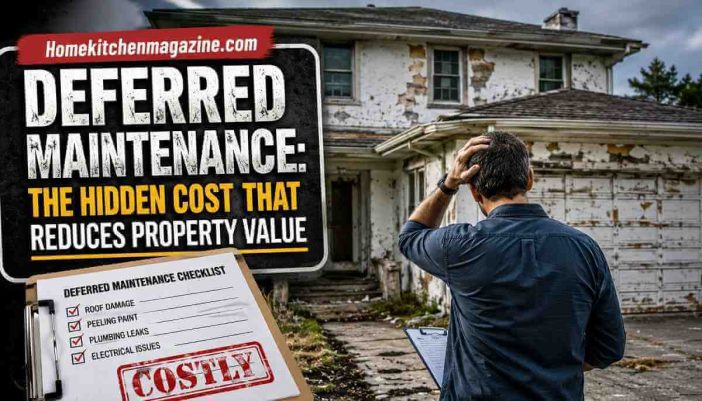
Most homeowners don’t wake up one morning and decide to neglect their homes.
Deferred maintenance usually happens gradually.
A loose gutter remains untouched after a busy season.
An aging water connector appears functional enough for another year.
Caulking around a shower begins to crack but still seems acceptable.
Individually, these decisions appear harmless.
Collectively, they create something buyers, inspectors, and appraisers notice almost immediately.
Not damage.
Not defects.
But a pattern.
And patterns influence value more than isolated issues ever do.
What Deferred Maintenance Really Means
Deferred maintenance refers to repairs, replacements, or inspections that should reasonably have been completed but were postponed.
Examples include:
- aging plumbing connectors
- roof repairs delayed for years
- deteriorated exterior paint
- HVAC systems operating beyond expected service life
- leaking faucets ignored for extended periods
- damaged weatherstripping
- malfunctioning exhaust fans
Deferred maintenance does not necessarily indicate poor ownership.
However, it often signals increasing uncertainty.
Why Deferred Maintenance Reduces Property Value
Buyers rarely calculate exact repair costs.
They estimate risk.
When multiple maintenance issues appear together, buyers begin asking questions.
What else was postponed?
Are hidden defects present?
Will additional expenses appear after closing?
Once uncertainty enters the conversation, value often starts moving downward.
This decline rarely happens because buyers calculate exact repair costs. More often, uncertainty changes how future ownership expenses are perceived and discussed.
Buyers, Appraisers, And Insurers Interpret Deferred Maintenance Differently
| Stakeholder | Main Concern |
|---|---|
| Buyer | Future expenses |
| Appraiser | Overall condition |
| Inspector | System reliability |
| Insurer | Probability of claims |
Each group evaluates deferred maintenance differently.
Yet they often reach the same conclusion.
Predictability has declined.
Small Problems That Quietly Become Expensive
Aging Plumbing Components
Braided stainless steel supply lines rarely fail without warning.
Minor corrosion.
Stiff connectors.
Visible discoloration.
These issues may appear insignificant.
But supply line failures can contribute to insurance complications and expensive restoration costs.
Homeowners interested in understanding component lifespan may also review How Long Do Braided Stainless Steel Supply Lines Really Last?
Moisture Issues
Small moisture stains often create outsized concern.
Particularly when documentation is missing.
Buyers frequently wonder:
Was the leak repaired?
Was mold testing performed?
Has moisture returned?
These concerns closely resemble scenarios discussed in How Home Inspectors Evaluate Water Damage During A Property Inspection.
Safety Systems
Smoke detectors.
Ground fault outlets.
Carbon monoxide alarms.
Many remain operational long past their recommended replacement intervals.
Functionality alone does not eliminate risk perception.
Viewed collectively, these unresolved items become inspection red flags that lower home value because they suggest a pattern of inconsistent upkeep rather than isolated oversights.
Deferred Maintenance And Effective Age
Chronological age is simple.
Effective age is subjective.
A house built twenty years ago but meticulously maintained may function like a much newer property.
A ten-year-old home with visible neglect may appear significantly older.
Appraisers routinely consider maintenance patterns when estimating effective age.
This relationship is explored further in How Appraisers Evaluate Home Condition Beyond Cosmetic Upgrades.
Original Value Framework: The Deferred Maintenance Snowball Effect
Deferred maintenance rarely grows linearly.
It compounds.
Stage One — Cosmetic Delay
Minor peeling paint.
Loose trim.
Faded sealants.
Limited impact.
Stage Two — Functional Decline
Leaks begin.
Moisture accumulates.
Mechanical systems operate inefficiently.
Moderate impact.
Stage Three — Inspection Concerns
Multiple deficiencies appear.
Documentation is unavailable.
Negotiations become more difficult.
At this stage, seemingly minor deficiencies frequently evolve into home inspection issues that commonly trigger price negotiations.
High impact.
Stage Four — Risk Pricing
Buyers reduce offers.
Insurers increase scrutiny.
Appraisers adjust condition ratings.
Maximum impact.
Documentation Interrupts The Pattern
Deferred maintenance becomes less concerning when owners demonstrate awareness and planning.
Examples include:
maintenance calendars
inspection reports
replacement schedules
contractor invoices
photo archives
Even incomplete documentation can help distinguish postponement from neglect.
Consistent records also strengthen buyer trust because maintenance records increase buyer confidence by showing that ownership decisions were intentional rather than reactive.
Homeowners preparing to sell may benefit from reviewing Water Damage Documentation Checklist Before Selling A Home.
What Buyers Often Assume
Many homeowners believe buyers focus on aesthetics.
They often do not.
Buyers quietly notice:
missing caulk
aged shut-off valves
cabinet swelling
uneven flooring
patched ceiling stains
discolored grout
These signals suggest a broader maintenance story.
Many of these observations happen within minutes of entering a property, which explains why homebuyers really notice small maintenance signals long before they receive inspection reports.
Sometimes correctly.
Sometimes unfairly.
But perception influences negotiations regardless.
Practical Deferred Maintenance Review Before Selling
Evaluate the following:
✓ Roof age documented
✓ HVAC service records available
✓ Plumbing connectors inspected
✓ Water stains explained
✓ Exterior paint intact
✓ Exhaust fans functional
✓ Safety devices tested
✓ Maintenance receipts organized
Completing this review may not increase market value directly.
However, it often protects existing value from unnecessary discounts.
Deferred maintenance is rarely judged by a single issue. It is judged by whether multiple unresolved items appear to form a predictable pattern.
If the next step is a lender-ordered appraisal, use the seller appraisal preparation checklist to turn those maintenance records, replacement dates, and repair documents into a concise evidence packet.
FAQ
Does deferred maintenance automatically reduce property value?
Not always.
Minor deferred items may have little impact individually, but several unresolved issues together often affect buyer confidence and negotiations.
Can maintenance records offset deferred maintenance concerns?
Yes.
Documentation demonstrates responsible ownership and frequently reduces uncertainty.
Do appraisers consider deferred maintenance?
Absolutely.
Appraisers routinely evaluate deferred maintenance when assessing condition ratings and effective age.
What Deferred Maintenance Really Costs
Deferred maintenance rarely appears as a single invoice.
Its cost emerges gradually.
Lower offers.
Longer selling periods.
Additional inspections.
Repair requests.
Insurance questions.
Stronger negotiation leverage for buyers.
Homes do not lose value simply because they age.
They lose value when aging systems become unpredictable.
And predictability is ultimately what buyers, appraisers, lenders, and insurers are trying to purchase.
This article is part of our Real Estate & Home Value Optimization Hub, where we examine how maintenance behavior, inspection outcomes, and risk perception shape long-term property value.