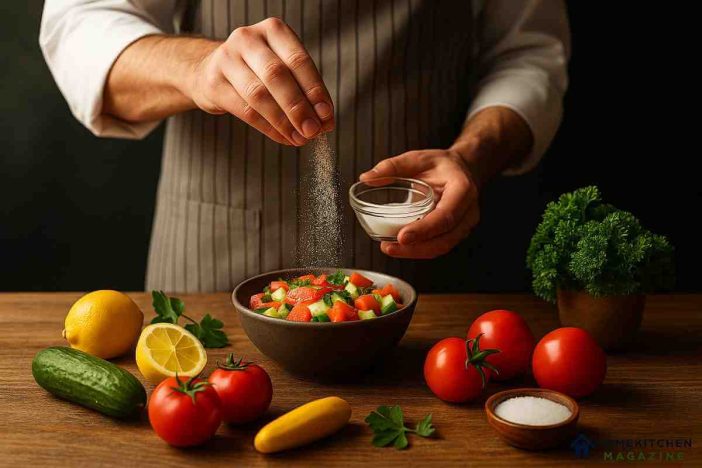
How To Reduce Excess Salt In Food often begins as a quiet panic in the kitchen—an extra pinch here, a distracted moment there, and suddenly the pot tastes sharper than it should.
The steam rising from the dish carries an aroma that promises comfort, yet one spoonful delivers a jolt that throws the balance off. I’ve been in that moment more than once: the late-night cooking, the rushing, the “Oops, I added too much.” But in every salty mistake lies a small culinary story—one that teaches us how fragile flavor can be, and how easily it can be rescued with the right touch, the right ingredient, and a calm breath before we think of throwing the whole dish away.
Why Reducing Salt Matters
Salt enhances flavor, balances sweetness, and helps extract aromas from ingredients. However, too much salt can quickly overwhelm a dish and affect your long-term health. Excess sodium increases blood pressure, places extra strain on the heart, and forces the kidneys to work harder. From a culinary perspective, too much salt also masks the natural flavors of vegetables, herbs, and proteins. Maintaining balance is the key to creating delicious meals and supporting good health.
According to the American Heart Association, excessive sodium intake increases the risk of high blood pressure and long-term cardiovascular problems. Their expert guidance on recommended daily sodium limits highlights how hidden sodium in processed foods can lead to unintended overconsumption. By following these evidence-based insights, readers can improve their dietary habits and apply smarter salt-reduction techniques in everyday cooking.
How To Reduce Excess Salt In Food
Using Acidic Ingredients
Acid is one of the fastest ways to counter overly salty food. Lemon juice, lime, vinegar, or tomatoes can cut through saltiness and brighten the overall flavor. This method works particularly well for soups, stir-fries, sauces, and stews because acidity helps neutralize the sharp edges of sodium.
Adding More Liquid
If the dish is liquid-based, adding more unsalted water, broth, or milk can reduce the salt concentration. Add gradually and allow it to simmer so the flavor has time to rebalance. If the dish becomes too watery afterward, a small amount of cornstarch slurry can help bring the consistency back to normal.
Using Cream or Yogurt
Cream, coconut milk, yogurt, or milk can soften the salty taste and create a smoother flavor profile. This technique works well for curry, tomato sauce, creamy soups, and chili. Dairy fats bind with salt and help reduce its intensity.
Adding Vegetables or Grains
Vegetables like potatoes, carrots, mushrooms, and zucchini absorb both salty liquid and flavor. Starches such as rice, pasta, barley, noodles, or low-sodium beans also help redistribute saltiness. This method is useful when you want to stretch the dish and make extra portions at the same time.
Using the Potato Absorption Method
Raw potato slices can absorb some of the excess salt in soups and stews. Add 2–3 slices and simmer for 15–20 minutes. Remove the slices before serving. This is not a complete solution but can noticeably reduce excess salt.
Some salt-reduction techniques discussed in this article also work beautifully in potato-based dishes. This recipe collection shows how ingredients like potatoes naturally absorb flavors and maintain balance without too much sodium. Readers can try various variations in potato salad recipes to understand how proper ingredient handling influences salt control.
Balancing With a Touch of Sweetness
A small amount of sugar, honey, or sweet syrup can balance saltiness in tomato dishes, stir-fries, and sauces. Use this method sparingly—just half a teaspoon at a time—so the dish doesn’t become sweet.
Adding Onion for Absorption
Raw onion slices added during cooking absorb some salt and mellow the flavor. This method works well in gravies, stir-fries, and sautéed dishes. Remove the onion slices before serving if you prefer a milder onion flavor.
Using Vinegar and Sugar Together
A mixture of one teaspoon white vinegar and one teaspoon sugar can stabilize acidity, sweetness, and saltiness. This combination is helpful for soups, sauces, and stews that need extra balance.
Smart Cooking Techniques To Prevent Oversalting
Season in Layers
Add salt gradually rather than all at once. Ingredients release moisture and flavor as they cook, so seasoning in stages keeps the dish balanced.
Taste Throughout the Cooking Process
Taste before and after adding ingredients such as soy sauce, broth, cured meats, or cheese—these are naturally salty and can quickly oversalt a dish.
Using Herbs and Spices
Fresh herbs like basil, parsley, cilantro, and dill can enhance flavor without relying heavily on salt. Spices such as cumin, paprika, garlic, pepper, and ginger deepen the flavor and reduce the need for extra sodium.
Choosing Low-Sodium Ingredients
Select unsalted butter, low-sodium broth, and reduced-salt packaged products to minimize hidden sodium.
Keeping your seasonings fresh plays a big role in achieving balanced flavors without relying too heavily on salt. Readers who want to improve their kitchen skills can learn how to store spices properly so their aroma and potency remain strong. When spices stay fresh, you naturally need less salt to enhance the taste of your dishes.
Reading Labels To Reduce Hidden Sodium
Checking Sodium Amount
Read the sodium content listed in milligrams per serving. Many packaged foods contain far more sodium than expected.
Understanding Percent Daily Value
Items with less than 5% Daily Value per serving are considered low sodium, while those with more than 20% are high sodium.
Watching the Serving Size
Some labels appear low in sodium but use unrealistically small serving sizes. Always compare similar serving portions.
Recognizing Hidden Sodium Sources
Ingredients such as baking soda, curing salts, MSG, and sodium benzoate add sodium even if the food doesn’t taste salty.
FAQs About Reducing Salt
How much salt is too much?
Most health guidelines recommend a maximum of 2,300 mg of sodium per day, or about one teaspoon of table salt. People with high blood pressure, kidney issues, or certain medical conditions should limit intake to around 1,500 mg per day.
Are there healthier salt alternatives?
Sea salt, Himalayan salt, and mineral salts provide slightly different textures and flavors but still contain sodium. True salt alternatives include herbs, spices, lemon juice, vinegar, garlic, onion, and roasted vegetables—these enhance flavor naturally without adding sodium.
Can food still taste good with less salt?
Yes. Techniques like roasting, caramelizing onions, toasting spices, or adding citrus zest create complex flavors. Fresh ingredients also help build depth without relying on salt. With practice, your palate becomes more sensitive to natural flavors and you may find yourself using less salt naturally.
Wrap Up
Fixing overly salty food is simple once you understand the science of balancing flavors. Using acidic elements, adding extra liquid, incorporating vegetables, or using dairy are all effective ways to reduce saltiness in a dish. Most importantly, tasting as you cook and seasoning gradually can prevent oversalting in the first place. With these techniques, your dishes remain flavorful, well-balanced, and healthier for everyday cooking.
Learning how to store fresh produce effectively helps home cooks preserve flavor, nutrition, and texture before ingredients are even cooked. This guide on how to keep cucumbers longer provides simple storage techniques that maintain freshness and minimize the need for excessive seasoning. Understanding proper storage ensures you use high-quality ingredients that support naturally balanced flavors.