Choosing the best indoor plants for apartments starts with understanding the limitations of your living space. A plant that thrives beside a sunny window may struggle in a shaded hallway, while a compact nursery plant can eventually outgrow a small shelf or become difficult to maintain in a crowded room.
Apartment conditions create several practical challenges: limited natural light, restricted floor space, indoor heating and cooling, inconsistent humidity, and the need to protect floors and furniture from drainage water. Households with cats or dogs must also consider plant toxicity before bringing new plants home.
Rather than choosing houseplants solely for their appearance or advertised air-purifying benefits, evaluate how well each species fits your apartment’s actual growing conditions.
Quick Answer: Which Indoor Plants Are Best for Apartments?
- For beginners: ZZ plants, snake plants, and pothos.
- For limited floor space: Spider plants and trailing pothos.
- For lower-light locations: ZZ plants and Chinese evergreens, provided sufficient usable light is still available.
- For households with cats or dogs: Spider plants, parlor palms, and calatheas are generally better non-toxic choices.
- For bright, sunny windows: Aloe vera.
- For rooms without usable natural light: Choose an appropriate grow light before introducing live plants.
Low-light tolerance does not mean a plant can survive indefinitely in darkness. Similarly, ordinary houseplants should not be treated as substitutes for proper ventilation or effective air filtration.
10 Best Indoor Plants for Apartments Compared
Before buying a houseplant, compare its preferred light conditions, growth habit, watering needs, and toxicity to pets. A plant that is easy to maintain may still be unsuitable for a small apartment if it eventually requires too much space or poses a risk to household animals.
| Plant | Light conditions | Space requirements | Watering needs | Care difficulty | Toxic to cats and dogs? |
|---|---|---|---|---|---|
| Snake plant | Medium to bright indirect; tolerates lower light | Narrow, upright growth | Allow soil to dry | Easy | Yes |
| Pothos | Medium to bright indirect; tolerates lower light | Trailing or climbing vines | Allow upper soil to dry | Easy | Yes |
| ZZ plant | Bright indirect; tolerates lower light | Upright, spreading clump | Allow soil to dry | Easy | Yes |
| Peace lily | Medium indirect; tolerates lower light | Broad foliage clump | Maintain moderate moisture | Moderate | Yes |
| Spider plant | Medium to bright indirect | Hanging basket or shelf with room for offsets | Allow upper soil to dry slightly | Easy | No |
| Rubber plant | Bright indirect | Large, upright floor plant | Allow upper soil to dry | Moderate | Yes |
| Chinese evergreen | Low to medium indirect, depending on cultivar | Compact to medium foliage clump | Allow upper soil to dry | Easy | Yes |
| Calathea | Medium to bright filtered light | Compact to medium foliage clump | Maintain even moisture | Demanding | No |
| Parlor palm | Medium indirect; tolerates lower light | Upright floor or tabletop plant when young | Allow upper soil to dry slightly | Moderate | No |
| Aloe vera | Very bright light with suitable direct sun | Compact rosette that may produce offsets | Allow soil to dry thoroughly | Easy with sufficient light | Yes |
Light tolerance does not mean a plant can grow indefinitely in darkness. Watering needs also change with temperature, humidity, container size, and seasonal light levels.
Space requirements describe typical growth habits rather than guaranteed mature dimensions. Check the expected size of the specific cultivar before purchasing.
Pet toxicity classifications are based on the plant’s botanical identity. Even plants classified as non-toxic may cause digestive upset if a pet eats substantial amounts of plant material.
Sources: University of Minnesota Extension — Lighting for Indoor Plants and the ASPCA Toxic and Non-Toxic Plants Database.
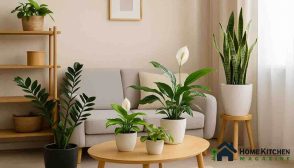
1. Snake Plant (Dracaena trifasciata)
Formerly known as Sansevieria trifasciata, the snake plant is a practical choice for apartments with limited floor space because its stiff, upright leaves grow vertically rather than spreading widely.
- Best placement: Narrow corners, shelves for compact cultivars, or floor space near a window.
- Light: Medium to bright indirect light is preferable, although the plant tolerates lower light.
- Space requirements: Compact cultivars fit smaller surfaces, while taller varieties need vertical clearance.
- Watering: Allow the potting mix to dry between waterings.
- Maintenance: Low.
- Pet safety: Toxic to cats and dogs if ingested.
The most common maintenance mistake is overwatering, particularly when the plant receives limited light. Use a well-drained potting mix and a container with drainage holes.
Choose this plant if: You want an upright, relatively low-maintenance houseplant and can prevent pets from accessing it.
2. Pothos (Epipremnum aureum)
Pothos makes efficient use of vertical space. Its trailing stems can grow from a shelf or hanging basket, while supported vines can climb without occupying much additional floor area.
- Best placement: Shelves, hanging baskets, or supported vertical growing areas.
- Light: Medium to bright indirect light; tolerates lower light.
- Space requirements: Small container footprint, but vines require regular trimming as they lengthen.
- Watering: Allow the upper portion of the potting mix to dry before watering.
- Maintenance: Low, with occasional pruning.
- Pet safety: Toxic to cats and dogs.
Variegated cultivars may lose some of their distinctive coloration under insufficient light. Long gaps between leaves can also indicate that the plant needs brighter conditions.
A hanging basket does not automatically make pothos safe around pets. Trailing stems may remain accessible, particularly to climbing cats.
Choose this plant if: You want trailing greenery without sacrificing valuable floor space.
3. ZZ Plant (Zamioculcas zamiifolia)
The ZZ plant stores water in its underground rhizomes, making it more forgiving of occasional missed watering than many tropical foliage plants.
- Best placement: Living rooms, home offices, and locations with moderate natural or supplemental light.
- Light: Bright indirect light is preferable, but lower light is tolerated.
- Space requirements: An upright clump that gradually becomes wider as new stems emerge.
- Watering: Allow the growing medium to dry between waterings.
- Maintenance: Low.
- Pet safety: Toxic to cats and dogs.
Frequent watering is usually a greater concern than occasional dryness. Persistent moisture around the roots and rhizomes can contribute to rot.
Although ZZ plants tolerate lower light, they still require a usable light source to maintain growth. If natural light is your main limitation, compare additional indoor plants for low-light conditions.
Choose this plant if: You have an irregular watering routine and sufficient space for a gradually expanding foliage plant.
4. Peace Lily (Spathiphyllum spp.)
Peace lilies offer broad foliage and distinctive white flower structures, but they generally require closer moisture management than snake plants or ZZ plants.
- Best placement: A location with filtered daylight and reasonably stable indoor temperatures.
- Light: Medium indirect light; lower light is tolerated, but flowering may decline.
- Space requirements: A spreading foliage clump, with size depending on cultivar.
- Watering: Maintain moderate moisture without allowing the roots to remain saturated.
- Maintenance: Moderate.
- Pet safety: Toxic to cats and dogs.
Repeated wilting should not be treated as a normal watering schedule. It may indicate that the potting mix is drying too severely, that the container is undersized, or that root problems are interfering with water uptake.
Despite its common name, peace lily is not a true lily of the genus Lilium. However, its insoluble calcium oxalate crystals can still cause significant oral irritation when chewed.
Choose this plant if: You can monitor soil moisture consistently and have a suitable location inaccessible to pets.
5. Spider Plant (Chlorophytum comosum)
Spider plants are useful in apartments because they can grow in hanging baskets and produce small plantlets that are relatively easy to propagate.
- Best placement: Hanging baskets or shelves near filtered daylight.
- Light: Medium to bright indirect light.
- Space requirements: A spreading rosette with arching leaves and hanging plantlets.
- Watering: Allow the upper potting mix to dry slightly between waterings.
- Maintenance: Low.
- Pet safety: Classified as non-toxic to cats and dogs by the ASPCA.
Brown leaf tips can result from several factors, including inconsistent watering, accumulated fertilizer salts, or sensitivity to certain dissolved minerals in tap water.
Provide enough clearance around the plant so that its arching leaves and plantlets are not repeatedly damaged by furniture or foot traffic.
Choose this plant if: You want a relatively easy hanging plant that is also a more suitable option for households with pets.
6. Rubber Plant (Ficus elastica)
A rubber plant can provide substantial vertical greenery, but it is less suitable for an apartment where the only available location is a small shelf or narrow windowsill.
Clemson Cooperative Extension notes that rubber plants can grow 6 to 10 feet tall or more indoors when sufficient space is available.
- Best placement: A bright living room with adequate floor space and ceiling clearance.
- Light: Bright indirect light.
- Space requirements: Substantial vertical clearance and room for expanding foliage.
- Watering: Allow the upper growing medium to dry before watering again.
- Maintenance: Moderate, including occasional pruning and leaf cleaning.
- Pet safety: Toxic to cats and dogs; its milky sap may also irritate skin.
Before buying a young rubber plant, consider whether its eventual size will obstruct walkways, furniture, or windows. Pruning can help manage growth, but the plant should still have sufficient room to develop.
Do not confuse Ficus elastica with the baby rubber plant, Peperomia obtusifolia, which has a different pet toxicity classification.
Choose this plant if: You have sufficient floor space and bright indirect light for a larger indoor plant.
7. Chinese Evergreen (Aglaonema spp.)
Chinese evergreens are adaptable foliage plants for apartments that receive less natural light than ideal for sun-loving species.
- Best placement: Living rooms, bedrooms, or home offices with indirect light.
- Light: Lower to medium indirect light, depending on cultivar. Highly variegated varieties may benefit from brighter conditions.
- Space requirements: Compact to medium-sized foliage clump.
- Watering: Allow the upper growing medium to dry before watering.
- Maintenance: Low to moderate.
- Pet safety: Toxic to cats and dogs.
Chinese evergreens are sensitive to prolonged overwatering and may also struggle in cold drafts. Avoid placing them directly beside air-conditioning outlets or against cold windows.
Choose this plant if: You have moderate space, filtered light, and a location that pets cannot access.
8. Calathea (Calathea and Goeppertia spp.)
Calatheas are attractive foliage plants, but they require more attention to moisture, humidity, and water quality than many beginner-friendly houseplants.
Many popular plants sold under the Calathea name are now botanically classified in the genus Goeppertia.
- Best placement: A sheltered location with filtered light and stable humidity.
- Light: Medium to bright filtered light without prolonged harsh direct sun.
- Space requirements: Compact to medium-sized foliage clump, depending on species.
- Watering: Maintain relatively even moisture without waterlogging the roots.
- Maintenance: Demanding compared with drought-tolerant houseplants.
- Pet safety: Calathea is listed as non-toxic to cats and dogs by the ASPCA; verify the specific plant’s botanical identity.
Dry indoor air, inconsistent watering, and sensitivity to dissolved substances in tap water may contribute to brown or curled leaf edges. Filtered or distilled water may help where water quality is a contributing factor.
Choose this plant if: Pet safety is important and you are willing to monitor moisture and humidity more closely.
9. Parlor Palm (Chamaedorea elegans)
The parlor palm is a relatively slow-growing indoor palm that provides upright greenery without immediately requiring the space of a large tropical tree.
- Best placement: A living room or sheltered corner with filtered daylight.
- Light: Medium indirect light; tolerates lower light.
- Space requirements: A gradually expanding clump with arching fronds.
- Watering: Allow the upper growing medium to dry slightly before watering.
- Maintenance: Moderate.
- Pet safety: Classified as non-toxic to cats and dogs by the ASPCA.
Avoid keeping the roots continuously wet. Inspect the undersides of the fronds periodically for spider mites, particularly when indoor air becomes dry.
Although a young parlor palm may fit on a tabletop, reserve additional space as the foliage develops.
Choose this plant if: You want an upright, non-toxic foliage plant and have enough room for its expanding fronds.
10. Aloe Vera (Aloe vera)
Aloe vera is a useful option for apartments with abundant natural light. Unlike many tropical foliage plants, it is adapted to relatively dry growing conditions and stores moisture in its thick leaves.
- Best placement: A bright windowsill with sufficient space for its spreading leaves.
- Light: Very bright light, including suitable direct sunlight after acclimation.
- Space requirements: A spreading rosette that may produce additional offsets.
- Watering: Allow the growing medium to dry thoroughly between waterings.
- Maintenance: Low when sufficient light and good drainage are available.
- Pet safety: Toxic to cats and dogs if ingested.
Aloe vera is not a good choice for a persistently dark apartment corner. Weak, elongated growth may indicate insufficient light, while soft or discolored leaves can result from excessive moisture.
Use a well-drained succulent potting mix and a container with open drainage holes.
Choose this plant if: You have a bright window, prefer infrequent watering, and can keep the plant away from pets.
How to Choose the Right Indoor Plant for Your Apartment
Choosing an apartment-friendly houseplant involves more than finding a species that tolerates indoor conditions. The plant must also fit your available light, usable space, maintenance routine, and household safety requirements.
Evaluate Available Light Before Buying
Observe the intended growing location at different times of the day. A bright apartment does not necessarily provide sufficient light in every corner.
In most of the United States:
- North-facing windows generally receive less direct sunlight.
- East-facing windows typically receive gentler morning sunlight.
- South-facing windows often provide the greatest sunlight exposure.
- West-facing windows may receive intense afternoon sunlight.
However, nearby buildings, balconies, trees, window coverings, seasonal changes, and distance from the window can significantly affect the light available to plants.
The University of Minnesota Extension’s indoor plant lighting guide provides useful guidance for matching plants to different lighting conditions.
If your chosen location receives insufficient natural light, provide suitable supplemental lighting or select a different location rather than expecting a low-light plant to survive indefinitely.
Consider Mature Size, Not Nursery Pot Size
A houseplant that fits comfortably on a shelf when purchased may eventually require considerably more space.
Before buying, consider:
- expected mature height and spread;
- room for larger containers as the roots develop;
- clearance around furniture, windows, and walkways;
- whether trailing stems will require pruning;
- and whether the plant will remain accessible for watering and maintenance.
For studio apartments and compact rooms, upright plants and hanging plants often make more efficient use of available space than broad, rapidly expanding foliage plants.
Check your lease or building rules before installing wall-mounted planters or ceiling hooks.
Match the Plant to Your Maintenance Routine
Choose plants according to the care you can realistically provide.
Snake plants and ZZ plants are generally more forgiving of occasional missed watering. Peace lilies and calatheas require closer monitoring of moisture, while aloe vera needs abundant light and periods of drying between waterings.
If you travel frequently or have an unpredictable schedule, avoid starting with plants that require consistently moist growing media or carefully controlled humidity.
Start with one or two suitable plants before expanding your collection. This gives you time to understand how quickly containers dry out under your apartment’s actual conditions.
Protect Floors, Furniture, and Walls From Moisture
Container drainage is essential for healthy roots, but uncontrolled drainage water can damage apartment surfaces.
Use containers with drainage holes and suitable saucers or waterproof trays. Empty collected water after watering rather than allowing the pot to remain submerged.
Additional precautions include:
- checking beneath containers for hidden moisture;
- using waterproof protection beneath pots placed on wood or laminate;
- avoiding direct contact between damp containers and painted walls;
- inspecting hanging planters for leaks;
- and supporting heavy containers on stable surfaces.
Keep plants away from electrical outlets, power strips, and electronic equipment where accidental watering spills could create a hazard.
If condensation or persistent dampness develops around your plants, investigate the moisture and ventilation conditions rather than adding more humidity.
Prioritize Pet Safety and Household Accessibility
If you live with cats or dogs, choose plants according to their verified botanical identity and toxicity classification.
Spider plants, parlor palms, and appropriately identified calatheas are generally preferable options from the plants compared in this guide.
Do not rely solely on placing toxic plants on high shelves, particularly in households with climbing cats.
Check unfamiliar species against the ASPCA Toxic and Non-Toxic Plants Database before purchasing.
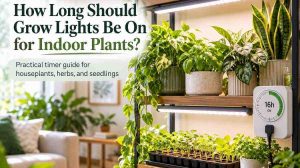
Use Supplemental Lighting When Necessary
A windowless room or deeply shaded apartment corner may require artificial lighting even for species marketed as low-light plants.
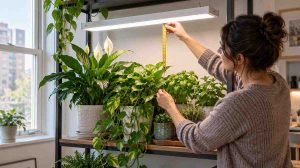
Choose a grow light that provides suitable coverage for the plant, and adjust its placement and operating schedule according to the species and available natural light.
A grow light should support plant growth without introducing unnecessary electrical consumption, excessive heat, or inconvenient glare into your living space.
Before purchasing supplemental lighting, estimate how much electricity a grow light uses to understand the ongoing operating cost of your indoor growing setup.
Once you have selected a suitable fixture, determine how many hours to run a grow light according to your plant’s lighting requirements and natural dark period.
Do Indoor Plants Really Purify Apartment Air?
Houseplants are frequently marketed as natural air purifiers, but their ability to remove airborne pollutants under controlled laboratory conditions should not be confused with meaningful air cleaning in an occupied apartment.
Early chamber experiments demonstrated that certain plants and their growing systems could remove some volatile organic compounds (VOCs). However, laboratory chambers differ considerably from real homes, where air exchange, ventilation systems, room volume, and continuously emitted pollutants affect indoor air quality.
A scientific review by Bryan E. Cummings and Michael S. Waring, published in the Journal of Exposure Science & Environmental Epidemiology in 2020, examined the practical effectiveness of potted plants in removing indoor VOCs.
The researchers estimated that approximately 10 to 1,000 plants per square meter of floor area would be needed to match the VOC removal provided by typical building air exchange under the conditions used in their analysis.
This is not a recommended planting density. Instead, it illustrates why a few ordinary houseplants are unlikely to provide meaningful air purification in a typical apartment.
For effective indoor air quality management, the U.S. Environmental Protection Agency emphasizes three primary strategies:
- Source control: Reduce or eliminate indoor pollution at its source.
- Ventilation: Introduce suitable outdoor air and remove indoor pollutants.
- Filtration: Use appropriate air filtration or cleaning equipment to supplement other measures.
Houseplants can still be worthwhile for personal enjoyment, indoor gardening, and adding greenery to limited living spaces. However, they should not replace functional ventilation, moisture management, or appropriate air filtration.
Choose apartment plants because they fit your growing conditions and maintenance capabilities—not because they promise to remove a specific percentage of indoor pollutants.
Scientific reference: Cummings, B. E., & Waring, M. S. (2020). Potted plants do not improve indoor air quality: A review and analysis of reported VOC removal efficiencies. Journal of Exposure Science & Environmental Epidemiology, 30, 253–261.
Frequently Asked Questions
What are the easiest indoor plants to grow in an apartment?
Snake plants, ZZ plants, and pothos are generally low-maintenance choices when provided with suitable light, proper drainage, and appropriate watering. However, all three are toxic to cats and dogs if ingested.
Which apartment plants are non-toxic to cats and dogs?
Spider plants, parlor palms, and appropriately identified calatheas are classified as non-toxic to cats and dogs by the ASPCA. Verify the botanical identity before purchasing, and discourage pets from chewing any houseplant.
Can indoor plants survive in a windowless apartment?
Yes, but only if they receive sufficient artificial light. Even low-light-tolerant plants need usable light for photosynthesis. A suitable grow light can provide supplemental or primary lighting when natural daylight is unavailable.
How often should I water indoor plants in an apartment?
There is no universal watering schedule. Check the growing medium and adjust watering according to the species, container size, temperature, humidity, and available light. Always allow excess water to drain.
Do indoor plants improve air quality in apartments?
Ordinary potted plants are unlikely to remove enough airborne pollutants to meaningfully improve air quality in a typical apartment. They should not replace pollution source control, proper ventilation, or appropriate air filtration.
What indoor plants are best for small apartments with limited floor space?
Compact snake plant cultivars, spider plants in hanging baskets, and trailing pothos can make efficient use of limited space. Consider mature plant size, secure placement, and pet toxicity before choosing.
Choose Plants That Fit Your Apartment
The best indoor plants for apartments are not necessarily the most popular or the most visually impressive. They are the plants that can grow successfully within your available light, space, maintenance capacity, and household safety requirements.
Start by evaluating the intended growing location. Choose a species with manageable mature dimensions, provide suitable drainage, and adjust watering according to actual growing conditions.
If you live with pets, prioritize verified non-toxic species. If natural light is limited, determine whether supplemental lighting is practical before purchasing additional plants.
Starting with a small collection of well-matched plants is often more sustainable than filling an apartment with species that require conditions you cannot consistently provide.
A successful indoor garden should complement your living space without creating unnecessary maintenance, moisture damage, safety concerns, or avoidable operating costs.