The dishwasher finishes its cycle at 2:14 AM.
No one hears the faint drip under the sink. No one sees the slow bead forming along a supply line. By morning, cabinet bases are damp. By next week, subfloor swelling begins.
Most kitchen water disasters don’t begin with floods. They begin with minutes.
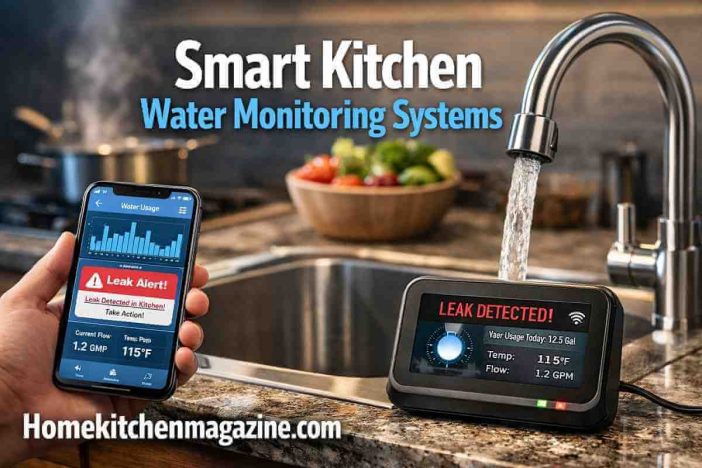
Smart kitchen water monitoring systems were created to close that timing gap. They promise instant alerts, automatic shut-off, and protection against hidden leaks. But marketing claims and real-world performance are not always aligned.
As someone who reviews maintenance patterns and inspection outcomes, one reality stands out: technology only prevents damage when it reduces response time and stops water flow.
So the question is not whether smart kitchen water monitoring systems detect leaks.
The real question is:
Do they prevent major damage?
What Smart Kitchen Water Monitoring Systems Actually Do
Before evaluating performance, define function.
Most smart kitchen water monitoring systems fall into three categories:
- Passive Leak Sensors
- Active Shut-Off Systems
- Whole-Home Water Monitoring Systems
Each serves a different purpose.
1. Passive Leak Sensors (Alert-Only Devices)
These are small moisture sensors placed:
- Under sinks
- Behind dishwashers
- Near refrigerator water lines
They detect water contact and send alerts via app or alarm.
What They Do Well
- Provide early detection
- Low installation complexity
- Affordable entry cost
- Minimal disruption
What They Don’t Do
- They do NOT stop water flow
- They rely on homeowner response
- They may fail if batteries die
Smart kitchen water monitoring systems in this category reduce detection time—but not exposure time.
If no one responds quickly, damage continues.
2. Automatic Shut-Off Systems
These systems integrate sensors with motorized shut-off valves at the main supply line.
When moisture is detected:
- Alert is triggered
- Water supply automatically closes
This dramatically changes risk profile.
Smart kitchen water monitoring systems with automatic shut-off reduce both detection and exposure time.
This is where prevention begins to become real—not theoretical.
3. Whole-Home Flow Monitoring Systems
These devices monitor water flow patterns:
- Abnormal continuous flow
- Unusual pressure changes
- Usage anomalies
They can detect leaks even without visible pooling.
More advanced systems analyze flow data patterns to identify micro-leaks over time.
These align with the system-thinking approach discussed in Water Leak Prevention Around Sinks, Dishwashers, and Supply Lines, where early detection is critical.
Do Smart Kitchen Water Monitoring Systems Prevent Major Damage?
Short answer:
Yes—but only under specific conditions.
Prevention requires:
- Immediate alert
- Immediate response OR automatic shut-off
- Functional installation
- Active maintenance
Without these, systems become expensive alarms.
Real-World Performance Patterns
Across inspection notes and homeowner reports, common failure points include:
- Sensors placed too far from leak source
- Dead batteries
- App notifications disabled
- Shut-off valves never tested
Technology reduces risk only when maintained.
This principle mirrors broader guidance from the Home Safety Inspection: What to Check Before Problems Appear, where systems must be reviewed—not assumed functional.
Buyer Intent Question: Are They Worth The Investment?
Let’s analyze through a value lens.
Average Kitchen Water Damage Repair
- Cabinet replacement
- Flooring replacement
- Subfloor remediation
- Mold mitigation
Even minor events can exceed several thousand dollars.
Compared to:
- Passive sensor system: relatively low cost
- Shut-off system: moderate cost
- Whole-home monitoring: higher upfront cost
From a risk-adjusted perspective, smart kitchen water monitoring systems are often financially justified in homes with:
- Multiple appliances
- Hardwood flooring
- Finished basements below kitchen
- Older plumbing
According to guidance referenced by the Insurance Information Institute, water damage remains among the most frequent residential claims—especially from plumbing failures.
The economics favor prevention when response time matters.
Where Smart Systems Fail
Smart kitchen water monitoring systems fail when:
- Installed without inspection strategy
- Treated as “install and forget”
- Not integrated into maintenance routine
Technology without routine creates false confidence.
This is why pairing monitoring systems with an Essential Home Maintenance Checklist increases reliability dramatically.
Placement Strategy: Where Sensors Actually Work
For maximum effectiveness:
Under kitchen sink cabinet (front and back)
Behind dishwasher
Near refrigerator supply line
Near shut-off valves
Avoid:
High shelves
Areas far from connection joints
Zones unlikely to see first moisture
Leak detection must occur at origin—not at overflow.
Integration With Property Value & Insurability
Smart kitchen water monitoring systems influence:
- Insurance risk perception
- Claim severity
- Inspection confidence
- Long-term property predictability
Homes that demonstrate proactive water control align strongly with principles in Preventive Maintenance Strategies That Protect Property Value.
Insurers increasingly reward homes that reduce loss severity.
Prevention is now part of value signaling.
Expert Insight: The Difference Between Detection and Prevention
Detection says: “There is a problem.”
Prevention says: “The problem stopped.”
Smart kitchen water monitoring systems only become preventive when:
- They automatically stop flow
OR - The homeowner responds immediately
Anything else is alert-based risk awareness.
Practical Buying Framework (Before You Purchase)
Ask:
- Does it shut off water automatically?
- How are alerts delivered?
- What is battery lifespan?
- Can shut-off valves be tested easily?
- Is installation compatible with your plumbing?
- Does it support long-term reliability?
Avoid systems that:
- Depend solely on app monitoring
- Lack manual override clarity
- Offer no maintenance reminder system
The most effective smart kitchen water monitoring systems are simple, stable, and integrated.
Long-Term Maintenance of Monitoring Systems
Quarterly:
- Test sensors with small water exposure
- Check battery status
Annually:
- Test shut-off valve function
- Confirm app notifications
- Review firmware updates
Systems must be inspected like any other safety layer.
This aligns with the schedule discussed in How Often Home Safety Systems Should Be Checked, where consistency prevents silent failure.
Reference
Best practices for leak detection and plumbing protection align with:
- InterNACHI plumbing inspection standards
- Insurance Information Institute water loss reports
Both emphasize early detection and rapid response as primary loss-reduction strategies.
FAQ – People Also Ask
Do Smart Water Leak Detectors Really Work?
Yes, when properly installed and maintained. They reduce detection time significantly.
Are Automatic Shut-Off Valves Necessary?
For high-value kitchens or homes with hardwood floors, automatic shut-off adds meaningful protection.
Can Smart Water Systems Lower Insurance Premiums?
In some cases, insurers may offer incentives, especially for automatic shut-off systems.
Do I Still Need Manual Inspections?
Yes. Technology supplements inspection—it does not replace it.
Wrapping Up: Technology Helps—But Systems Thinking Wins
Smart kitchen water monitoring systems can prevent major damage—but only when integrated into a broader prevention strategy.
They are not magic devices.
They are timing tools.
The real protection comes from:
- Early detection
- Immediate shut-off
- Consistent inspection
- Documented maintenance
When installed thoughtfully and maintained consistently, smart kitchen water monitoring systems shift risk from unpredictable to controlled.
And controlled risk is what protects kitchens, safety, and long-term value.