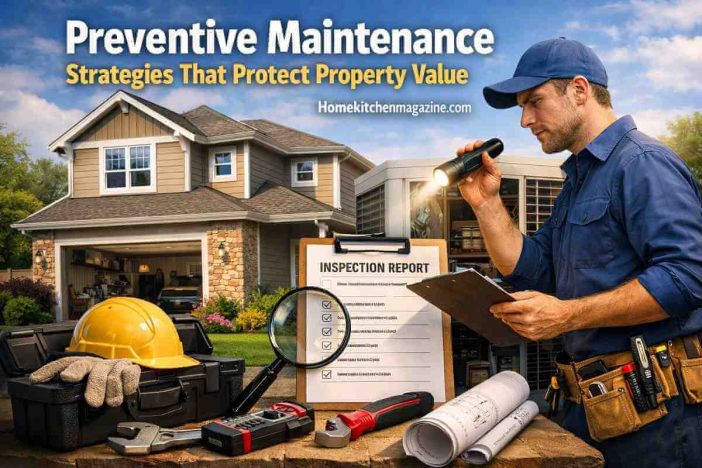
Preventive Maintenance Strategies That Protect Property Value: How Smart Upkeep Preserves Safety, Reduces Risk, and Sustains Long-Term Home Worth
In practice, homes don’t lose value when they’re listed.
They lose value years earlier, when maintenance becomes irregular and systems age without oversight.
During inspections and reviews, the same pattern appears: buyers don’t penalize homes for being older—they penalize them for being unpredictable. Preventive maintenance strategies that protect property value are less about improvement and more about reliability.
This article shows how maintenance choices made today quietly shape safety, insurability, and market confidence tomorrow.
What “Protecting Property Value” Really Means
Protecting value is not about chasing appreciation.
It’s about preventing depreciation.
Effective preventive maintenance:
- Reduces safety risks before they escalate
- Keeps repair costs small and scheduled
- Preserves structural and system integrity
- Signals responsible ownership to insurers and buyers
Homes maintained predictably age better—financially and functionally.
Why Preventive Maintenance Is a Value Strategy (Not a Chore)
Predictability Beats Perfection
Buyers and inspectors favor homes where systems:
- Have maintenance records
- Show consistent care
- Present fewer surprises
A home that works as expected is more valuable than one that looks updated but hides issues.
Risk Reduction Preserves Confidence
Unaddressed risks—water, electrical, structural—are the fastest way to erode value. Preventive maintenance strategies that protect property value focus on risk control, not cosmetic fixes.
Much of this predictability comes from regular home safety inspections that identify emerging risks before they affect valuation or insurability.
Core Preventive Maintenance Strategies That Protect Property Value
1. System-Based Maintenance (Not Task-Based)
Why it matters:
Homes are collections of systems. Treating maintenance as isolated tasks misses how problems spread.
Strategy:
- Group upkeep by system: plumbing, electrical, HVAC, structure
- Review how systems interact
- Schedule checks based on wear, not seasons
System-based upkeep works best when supported by an essential home maintenance checklist that turns preventive intent into repeatable routines.
2. Early Water Risk Management
Why it matters:
Water damage is among the most value-destructive—and preventable—issues.
Strategy:
- Inspect connections and seals proactively
- Use early detection in high-risk areas
- Address moisture signs immediately
Homes with documented water-risk prevention retain condition and insurability.
Homes that apply early water damage prevention measures retain condition, reduce insurance risk, and avoid the silent losses that most affect long-term value.
3. Electrical Load & Safety Reviews
Why it matters:
Electrical issues affect safety, insurance, and buyer confidence.
Strategy:
- Reassess loads as appliances change
- Maintain panels and surge protection
- Address recurring breaker trips promptly
Electrical predictability signals responsible ownership.
4. Safety Systems That Age Reliably
Why it matters:
Outdated safety devices raise red flags during inspections.
Strategy:
- Replace detection devices on schedule
- Test interconnected systems regularly
- Document updates and checks
Homes maintain inspection confidence when long-term home safety systems are updated, tested, and documented rather than simply installed and forgotten.
5. Exterior & Drainage Preservation
Why it matters:
Exterior neglect accelerates interior damage.
Strategy:
- Maintain gutters, grading, and sealants
- Prevent water from contacting foundations
- Address exterior wear early
Exterior integrity protects structural value quietly but decisively.
6. HVAC Consistency and Indoor Airflow
Why it matters:
HVAC reliability influences comfort, efficiency, and inspection outcomes.
Strategy:
- Replace filters on schedule
- Monitor airflow consistency
- Address abnormal noise or cycling early
Well-maintained HVAC systems extend lifespan and reduce buyer hesitation.
How Maintenance Signals Value to Buyers and Insurers
Preventive maintenance strategies that protect property value create evidence, not promises.
What reviewers look for:
- Logs of inspections and replacements
- Predictable system behavior
- Absence of emergency repairs
Homes with fewer surprises command stronger confidence.
Buyers and insurers evaluate homes through the combined lens of safety, insurability, and predictability, not surface-level improvements.
Expert Insight: What Protects Value in the Long Run
Across inspections and evaluations, homes that retain value share three traits:
- Problems are detected early
- Repairs are smaller and scheduled
- Maintenance is documented, not assumed
Maintenance doesn’t increase value—it prevents its erosion.
Practical Tips to Make Preventive Maintenance Sustainable
- Use a simple log (date, system, action)
- Schedule reviews quarterly, not reactively
- Fix small issues immediately
- Treat maintenance as risk management
Consistency compounds quietly.
FAQ – People Also Ask
Do preventive maintenance strategies really protect property value?
Yes. They reduce risk, preserve condition, and increase predictability—key factors in valuation and buyer confidence.
What maintenance issues reduce home value the most?
Unaddressed water damage, electrical risks, and structural moisture issues are among the most damaging.
How often should preventive maintenance be reviewed?
Light reviews quarterly with an annual system-wide assessment provide strong coverage.
Is preventive maintenance better than renovations for value?
Maintenance prevents depreciation; renovations may add appeal. Both matter, but maintenance comes first.
Documentation only matters when reviews happen consistently. Knowing how often home safety systems should be checked helps ensure maintenance remains predictable rather than reactive.
Reference
- References to established home inspection standards and insurer loss-prevention guidance used to reinforce best practices.
This discussion is part of our Home Safety, Maintenance & Prevention hub, where preventive maintenance is examined as a key factor in safety, reliability, and long-term property value.
Wrapping Up: Value Is Preserved Long Before It’s Measured
Property value isn’t protected at sale—it’s protected through years of quiet decisions.
Preventive maintenance strategies that protect property value keep homes safe, predictable, and trustworthy.
They reduce risk, prevent surprise costs, and sustain confidence.
That’s how homes remain valuable—without chasing trends or cosmetic fixes.