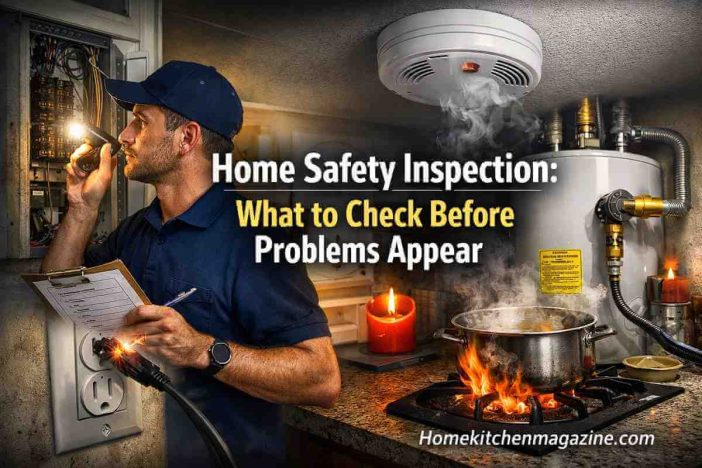
In practice, inspections don’t exist to confirm failure.
They exist to confirm stability.
Across maintenance reviews and inspection notes, the same truth appears: homes that are inspected regularly don’t avoid problems entirely—they control when and how problems are addressed. A proper home safety inspection shifts repairs from emergencies to scheduled maintenance.
This guide explains how to inspect a home the way professionals think about it—calmly, systematically, and before issues announce themselves.
What a Home Safety Inspection Really Covers
A comprehensive inspection looks beyond visible hazards. It evaluates systems, how they age, and how they interact.
A professional-grade inspection focuses on:
- Safety risks
- System reliability
- Early indicators of failure
- Predictability over time
It is not a one-time checklist—it’s a recurring process.
When a Home Safety Inspection Should Be Done
Inspections are most effective when timed correctly.
Recommended triggers:
- Annually, as a baseline review
- After severe weather events
- Following renovations or system upgrades
- When unexplained changes appear (noise, odor, moisture)
Inspection timing matters. Understanding how often home safety systems should be checked helps ensure inspections remain proactive rather than reactive.
Core Areas to Check in a Home Safety Inspection
Structural & Exterior Conditions
What to check:
- Roof surfaces and flashing
- Gutters and drainage flow
- Exterior sealants and siding
- Signs of foundation moisture
Why it matters:
Exterior issues allow water intrusion—the most common gateway to deeper damage.
Plumbing & Water Risk Indicators
What to check:
- Visible pipe connections and valves
- Under-sink areas for moisture
- Appliance hoses and drains
- Water pressure consistency
Inspection Insight:
Moisture staining often appears weeks before active leaks.
Many plumbing-related risks can be minimized through early water damage prevention, which focuses on detection before moisture becomes visible damage.
Electrical Safety & Load Stability
What to check:
- Breaker panel condition and labeling
- Outlet heat, buzzing, or discoloration
- Extension cord overuse
- Surge protection presence
Why it matters:
Electrical problems develop silently and escalate quickly when ignored.
Fire Safety & Detection Systems
What to check:
- Smoke detector age and response
- Carbon monoxide detector placement
- Fire extinguisher accessibility
- Clear exit paths
Professional Note:
Detection devices that “seem fine” may already be past effective lifespan.
Security & Access Points
What to check:
- Door and window alignment
- Lock functionality
- Sensor and camera operation
- Backup power for monitoring systems
Inspection findings are most effective when supported by long-term home safety systems that remain reliable as homes and usage patterns evolve.
HVAC & Ventilation
What to check:
- Filter condition
- Airflow balance
- Unusual noise or cycling
- Vent obstructions
Why it matters:
HVAC reliability affects safety, comfort, and system longevity.
Interior Wear & Secondary Indicators
What to check:
- Ceiling stains or wall discoloration
- Soft flooring or uneven surfaces
- Door and stair stability
- Odors indicating moisture or airflow issues
These signs often point to underlying system stress.
Turning Inspections Into a Maintenance Advantage
A single inspection helps.
A documented inspection routine protects.
Consistent inspections improve predictability and inspection confidence, reducing how risk is interpreted during evaluations.
Best practice:
- Log findings (date, area, notes)
- Address minor issues immediately
- Track recurring observations
- Pair inspections with a maintenance checklist
Inspections work best when paired with an essential home maintenance checklist that ensures findings are followed by consistent action.
Expert Insight: What Inspectors Flag First
In routine assessments, professionals often flag:
- Moisture indicators without visible leaks
- Electrical load creep over time
- Aging safety devices beyond recommended lifespan
None are dramatic—but all are predictable.
Practical Tips for Homeowners Conducting Self-Inspections
- Walk the home with a system-by-system mindset
- Look for changes, not disasters
- Inspect during quiet hours to hear anomalies
- Treat discomfort as information
Consistency is more valuable than expertise.
FAQ – People Also Ask
What is included in a home safety inspection?
Structural, plumbing, electrical, fire safety, security, HVAC, and interior risk indicators.
How often should a home safety inspection be done?
At least annually, with additional checks after major events or changes.
Can homeowners perform their own inspections?
Yes, for routine checks. Professional inspections add value for deeper assessments.
Do inspections help protect property value?
Yes. They reduce surprise repairs and improve predictability—key factors in valuation.
This guide is part of our Home Safety, Maintenance & Prevention hub, where we connect inspections, preventive maintenance, and long-term safety systems into one structured framework for homeowners.
Wrapping Up: Inspections Prevent Urgency
Home safety inspections don’t exist to find problems—they exist to keep problems manageable.
When inspections are routine, repairs are smaller, costs are predictable, and homes remain trustworthy.
That’s how safety becomes part of daily living—not a reaction to failure.
Reference
- References to established home inspection standards and fire safety organizations to reinforce accepted best practices (no direct URLs).