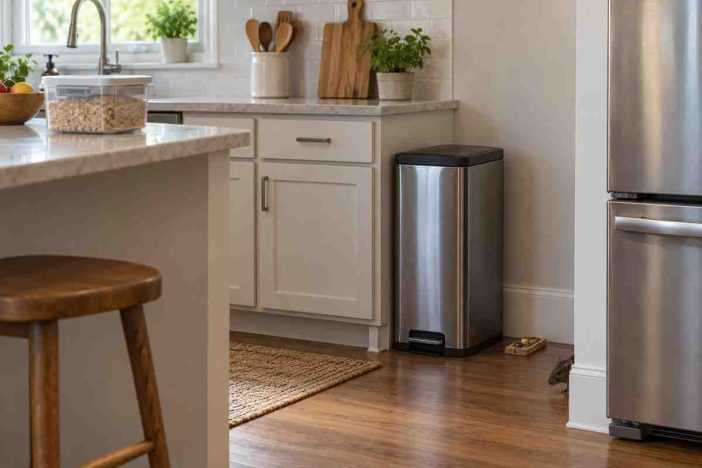
Finding a rat in the kitchen requires more than trying to repel it with strong smells. Effective control starts by removing food and water sources, identifying how rats are entering, sealing those openings, and trapping rodents that are already inside.
Kitchen infestations deserve prompt attention because rats can contaminate food and surfaces, damage packaging and wiring, and leave droppings or urine in hidden areas. Focus first on evidence of activity—such as fresh droppings, gnaw marks, damaged food packages, or movement along walls and behind appliances.
Quick Answer: To get rid of rats in the kitchen, store food and garbage securely, eliminate accessible water sources, inspect and seal entry points, and place appropriately sized snap traps along walls where rat activity is visible. Keep traps and bait away from children and pets. If activity continues despite sanitation, sealing, and trapping, consider a qualified pest-control professional.
Why Rats Invade Kitchens
Rats are naturally drawn to kitchens due to several key factors:
- Food Source: Kitchens are a treasure trove of food for rats. The remnants of meals, crumbs, and open food containers provide an abundant and easily accessible food source. Rats have an acute sense of smell and can detect even the smallest food particles.
- Water Supply: In addition to food, rats need a reliable water source. Kitchens usually have a ready supply of water through leaky pipes, condensation, or even unattended pet water bowls. This, combined with their need for hydration, makes kitchens an attractive location.
- Warmth and Shelter: Kitchens tend to be warmer than other parts of a house due to cooking activities and appliances. This warmth is particularly appealing to rats, especially during colder seasons. Additionally, the nooks and crannies of a kitchen offer numerous hiding spots and potential nesting sites.
- Easy Access: Rats are skilled climbers and can squeeze through surprisingly small openings. Kitchens often have numerous entry points, including gaps around pipes, vents, and even improperly sealed doors and windows.
- Predominance of Clutter: Kitchens can sometimes be cluttered, providing rats with plenty of hiding spots and cover. Clutter can also make it difficult to identify and seal off potential entry points.
Understanding these motives is crucial for effective rat removal. By addressing these factors, homeowners can implement targeted strategies such as proper food storage, sealing entry points, and maintaining a clean and clutter-free kitchen.
Identifying Rat Entry Points
Rats are notorious for their ability to squeeze through tiny openings. Identifying their entry points is a crucial step in effectively getting rid of them from your kitchen. Follow these steps for a thorough inspection:
Exterior Inspection
- Begin by examining the exterior of your home, paying close attention to any gaps, cracks, or holes.
- Check around utility entrances, pipes, vents, and other openings. Even the smallest gaps can be potential entry points for rats.
Foundation and Walls
- Inspect the foundation for any signs of gaps or cracks. Rats can exploit even minor imperfections to gain access.
- Look for holes or gaps in the walls, especially near the ground level. Rats may create small burrows or enlarge existing openings.
Doors and Windows
- Check the seals around doors and windows. Rats can gnaw on weather stripping and create openings.
- Ensure that screens and vents are intact and without damage.
Utility Lines
Examine areas where utility lines enter your home. These are common entry points for rats. Seal any gaps or openings around these points.
Attic and Basement
- Inspect the attic and basement thoroughly. Look for any signs of droppings, gnaw marks, or openings.
- Pay attention to areas where electrical wires, plumbing, or HVAC systems enter these spaces.
Interior Inspection
- Once you’ve covered the exterior, move inside and inspect the kitchen area.
- Focus on areas near appliances, cabinets, and countertops. These are common places for rats to enter.
- Check for gaps or openings in the walls, floors, and ceilings.
Pipes and Vents
Inspect areas around pipes, drains, and vents in the kitchen. Seal any gaps or openings around these fixtures.
Crawl Spaces
If applicable, check crawl spaces beneath the kitchen. Rats may find their way in through openings in the flooring.
If you are not sure whether the signs in your kitchen come from a rat or a mouse, see our rat vs. mouse identification guide before choosing traps or planning exclusion work.
5 Safe Steps to Get Rid of Rats in the Kitchen
Use these five steps together rather than relying on a single tactic. Effective kitchen rat control combines sanitation, exclusion, secure food storage, trapping, and carefully managed bait when necessary.
1. Remove Garbage and Accessible Water Sources
Rats are more likely to remain in a kitchen when food waste and water are consistently available. Empty kitchen garbage regularly and use a sturdy container with a tight-fitting lid. Clean food spills promptly, wash dishes and utensils soon after use, and avoid leaving pet food or water bowls out overnight.
Also check for dripping faucets, leaking pipes, condensation, or other accessible water sources around the sink, refrigerator, dishwasher, and nearby utility connections. Removing these resources makes the kitchen less attractive while you address entry points and rats already inside the home.
2. Close The Entrance Hole Of The Rat
Blocking off potential access points is a crucial step in rat control. Rats can enter through surprisingly small openings, so it’s essential to thoroughly inspect and seal any potential entry points to prevent their entry.
- Identify Entry Points: Begin by carefully inspecting the kitchen and surrounding areas for any openings or gaps where rats might gain access. Pay close attention to areas around pipes, vents, windows, doors, and electrical outlets.
- Choose materials based on the size of the opening: For small holes, CDC recommends filling the opening with steel wool and securing it with caulk or spray foam. For larger holes, use more durable materials such as hardware cloth, metal sheeting, cement, or lath screen. Pay particular attention to gaps around pipes, utility lines, vents, cabinets, and appliances.
- Seal Gaps and Cracks: Use the chosen material to fill in any gaps, cracks, or holes. Focus on areas where pipes or wires enter the kitchen, as these are common entry points for rats.
- Pay Attention to Ventilation: Ensure that ventilation systems, especially exhaust fans, are adequately screened to prevent rats from entering through these openings.
- Seal Exterior Entry Points: It’s not only important to focus on the interior of the kitchen. Check the exterior of the house as well. Seal any gaps or cracks in the foundation, walls, or roof.
- Check for Loose Tiles and Floorboards: Rats can squeeze through even small gaps between tiles or floorboards. Replace or repair any loose or damaged tiles and floorboards.
- Maintain a Regular Inspection Routine: Periodically inspect the kitchen and surrounding areas for any new potential entry points. Rats are persistent, so staying vigilant is key to long-term prevention.
- Consider Professional Assistance: In cases where there are particularly challenging entry points or a large infestation, it may be beneficial to consult a professional pest control service. They have the expertise and tools to effectively identify and seal entry points.
By diligently sealing off potential access points, you create a formidable barrier that significantly reduces the chances of rats entering the kitchen and other areas of your home. This, combined with other rat control measures, forms a comprehensive approach to rat elimination.
3. Store Food in Rodent-Resistant Containers
Do not leave accessible food on counters, tables, or open shelves overnight. Store pantry foods in thick plastic, metal, or glass containers with tight-fitting lids, and refrigerate foods that require cold storage.
Pay particular attention to flour, rice, cereal, grains, snacks, pet food, and other packages that rats can chew through. Clean crumbs and spills promptly, and inspect food packages near suspected rat activity. Discard food that has been gnawed, contaminated, or exposed to rodent droppings or urine.
4. Trap Rats Along Active Runways
Using Snap Traps
Traditional snap traps are one of the recommended ways to remove rats that are already inside the home. Use traps designed specifically for rats rather than smaller mouse traps, and always follow the manufacturer’s instructions.
- Place traps where activity is visible: Focus on walls, behind appliances, inside the backs of cabinets, or near droppings, gnaw marks, damaged food packages, and suspected entry points.
- Position traps correctly: Place the baited end next to the wall so the trap forms a “T” with the wall, because rats commonly travel along edges.
- Pre-bait cautious rats if necessary: If rats avoid a new trap, place bait on an unset trap first. Once the bait is being taken, set the trap.
- Check traps daily: Remove captured rodents promptly while wearing gloves, and keep traps inaccessible to children and pets.
- Continue until activity stops: Keep trapping until there are no new droppings, urine spots, gnawing, or captures for about a week.
5. Use Rodent Bait Only for Persistent Infestations
If sanitation, entry-point sealing, and properly placed snap traps do not stop the infestation, a rodenticide bait station may be considered. For household use, choose only an EPA-registered product labeled for the target rodent and use it exactly as directed.
- Use the supplied bait station: Consumer rodenticide products are sold in ready-to-use bait stations designed to reduce access to poison.
- Protect children and pets: Place bait stations only where children, pets, and other non-target animals cannot reach them.
- Keep bait away from food: Never store or place rodenticide where it could contaminate food, pet food, preparation surfaces, or utensils.
- Follow the label: Do not transfer bait into homemade containers or use more than directed.
- Remove carcasses promptly: Dead rodents should be removed according to the product instructions to reduce accidental exposure to pets and wildlife.
If rat activity remains heavy or continues after exclusion, sanitation, trapping, and correctly used bait stations, contact a qualified pest-control professional. Persistent activity may indicate multiple entry points, inaccessible nesting areas, or an infestation that cannot be safely controlled with household measures alone.
Authoritative Rat-Control Resources
The control methods in this guide align with current recommendations from the U.S. Centers for Disease Control and Prevention and the U.S. Environmental Protection Agency. For additional safety guidance, see the CDC rodent-control guidance and the EPA guidance for safely using rodent bait products.
FAQs About How To Get Rid of Rats in Kitchen
Are rat droppings dangerous?
Rat droppings and urine can be contaminated with germs that cause illness. The main concern during cleanup is disturbing dried waste and creating contaminated particles that can be inhaled. Do not sweep or vacuum dry rodent droppings, urine, or nesting material. Wet and disinfect them before removal, and wear rubber or plastic gloves while cleaning.
How can I clean up after a rat infestation?
If the area has been closed or poorly ventilated, open doors and windows and leave the area for about 30 minutes before cleaning. Wear rubber or plastic gloves. Do not sweep or vacuum dry droppings.
Spray the droppings and urine until very wet with a household disinfectant labeled as a disinfectant, or use a freshly prepared bleach solution of 1 part household bleach to 9 parts water. Let it soak for about 5 minutes, or follow the disinfectant label if it specifies a different contact time.
Wipe up the material with paper towels and place the waste in a covered garbage container. Then disinfect the surrounding hard surfaces, including floors, countertops, cabinets, or drawers that may have been contaminated. Follow the product label for any additional requirements on food-contact surfaces. Wash gloved hands before removing the gloves, then wash your bare hands with soap and warm water.
Final Thoughts on Getting Rid of Rats in the Kitchen
Getting rid of rats in the kitchen requires more than a single trap or repellent. The most reliable approach combines removing food and water sources, sealing entry points, storing food securely, trapping rats that are already inside, and using bait stations only when necessary and according to the product label.
Continue checking for fresh droppings, gnaw marks, damaged food packages, or new entry points after treatment. If rat activity persists despite sanitation, exclusion, and trapping, contact a qualified pest-control professional to identify hidden access points or nesting areas.