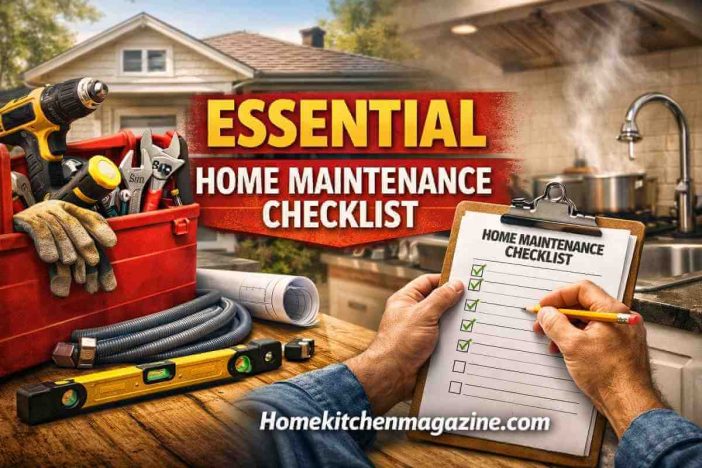
Essential Home Maintenance Checklist: A Practical, Prevention-First Guide to Protect Your Home Long Term
Most homeowners intend to maintain their homes. Very few do it consistently.
In real-world reviews, the gap isn’t knowledge—it’s structure.
Homes don’t deteriorate because owners don’t care. They deteriorate because maintenance is treated as a series of reminders, not a system. An essential home maintenance checklist converts intention into routine, routine into prevention, and prevention into long-term protection.
This checklist is part of our Home Safety, Maintenance & Prevention hub, where preventive maintenance, inspection routines, and long-term home reliability are examined as one connected system.
This article lays out a checklist designed to:
- Reduce risk before damage occurs
- Protect safety and livability
- Preserve insurance confidence and resale value
- Integrate seamlessly with daily living
No seasonal hype. No fear-based urgency. Just what actually works.
What Makes an “Essential” Home Maintenance Checklist?
Before listing tasks, define the standard. An essential checklist must be:
- Preventive — stops problems early, not after failure
- Repeatable — easy to follow year after year
- System-Based — covers the home as interconnected systems
- Value-Protective — safeguards structure, safety, and resale appeal
Anything else becomes a to-do list you stop using.
The Essential Home Maintenance Checklist (System-Based)
Structural & Exterior Integrity
Why it matters: Small exterior failures escalate quickly into costly interior damage.
Checklist
- Inspect roof surface and flashing for early wear
- Check gutters and downspouts for blockages
- Examine siding, trim, and sealants
- Ensure grading directs water away from the foundation
Insight: Homes with clean drainage and intact sealing experience fewer moisture-related claims over time.
Many of these checks overlap with a broader safety inspection checklist, especially when evaluating structural, electrical, and system-level risks before visible problems appear.
Plumbing & Water Risk Prevention
Why it matters: Water damage is one of the most expensive—and preventable—home risks.
Checklist
- Inspect visible pipes for corrosion or leaks
- Test shut-off valves for accessibility and function
- Check water pressure for abnormal fluctuations
- Inspect appliance hoses and connections
Practical Tip: Pair this checklist with early water damage prevention strategies to catch leaks and moisture risks before they escalate into costly repairs.
Electrical Safety & Load Management
Why it matters: Electrical issues often develop silently.
Checklist
- Inspect breaker panel labeling and access
- Check outlets and switches for heat or buzzing
- Confirm surge protection is in place
- Review load distribution for high-use appliances
Expert Insight: Outdated panels and overloaded circuits are consistently flagged in safety inspections.
Fire Safety & Detection Systems
Why it matters: Fire prevention depends on reliability, not presence alone.
Checklist
- Test smoke detectors and replace aging units
- Check carbon monoxide detectors in key zones
- Review fire extinguisher placement and pressure
- Ensure clear escape routes are maintained
Reminder: Detection devices fail quietly when neglected—maintenance keeps them effective.
Security & Monitoring Systems
Why it matters: Security systems protect by deterrence and continuity, not novelty.
Checklist
- Test sensors, cameras, and alerts
- Verify backup power or battery health
- Review access points (doors, windows, locks)
- Update credentials and permissions as needed
HVAC & Indoor Air Quality
Why it matters: Comfort, efficiency, and health converge here.
Checklist
- Replace or clean filters on schedule
- Inspect vents and airflow consistency
- Check thermostat accuracy
- Listen for abnormal system noise
Data Point: Consistent HVAC maintenance improves efficiency and extends system lifespan.
Interior Wear & Safety Hazards
Why it matters: Interior issues often signal deeper problems.
Checklist
- Inspect floors for soft spots or cracks
- Check walls and ceilings for moisture staining
- Ensure stair rails and steps are secure
- Address trip hazards promptly
How Often Should This Checklist Be Used?
An essential checklist is cyclical, not seasonal.
Recommended cadence:
- Light review: quarterly
- Full system review: annually
- Event-based review: after storms, renovations, or occupancy changes
Related Post: How Often Home Safety Systems Should Be Checked
Turning the Checklist Into a Maintenance System
A checklist works best when paired with:
- A calendar reminder
- A simple log (date, action, notes)
- Clear responsibility (who checks what)
This system-based approach reflects the prevention-first framework used throughout our Home Safety, Maintenance & Prevention hub.
This transforms maintenance from a chore into a risk-management routine.
When applied consistently, this checklist supports broader safety and predictability signals that shape inspection outcomes and long-term property value.
Expert Insight: What We See in Long-Maintained Homes
Across inspections and reviews, well-maintained homes share three traits:
- Problems are detected early
- Repairs are smaller and cheaper
- Systems age predictably—not catastrophically
Maintenance doesn’t eliminate issues. It controls their timing and cost.
Practical Tips to Keep the Checklist Sustainable
- Keep tasks short and specific
- Avoid over-engineering the process
- Document changes and repairs
- Review annually and adjust as systems age
Consistency beats intensity.
FAQ – People Also Ask
What is the most important home maintenance task?
There isn’t one. Prevention works when systems are maintained together, not individually.
How often should I follow a home maintenance checklist?
Quarterly reviews with an annual deep check provide strong long-term coverage.
Does regular maintenance really save money?
Yes—by reducing emergency repairs, extending system life, and preserving property value.
Is this checklist suitable for older homes?
Yes. In fact, older homes benefit most from structured maintenance.
This guide is part of our Home Safety, Maintenance & Prevention hub, where we connect inspections, preventive maintenance, and long-term safety systems into one structured framework for homeowners.
Wrapping Up: Maintenance Is How Safety Becomes Predictable
Homes that age well don’t rely on reminders—they rely on routines.
An essential home maintenance checklist turns uncertainty into foresight and problems into manageable tasks.
Prevention isn’t dramatic.
It’s quiet, consistent, and incredibly effective.
That’s how homes stay safe—and valuable—over time.