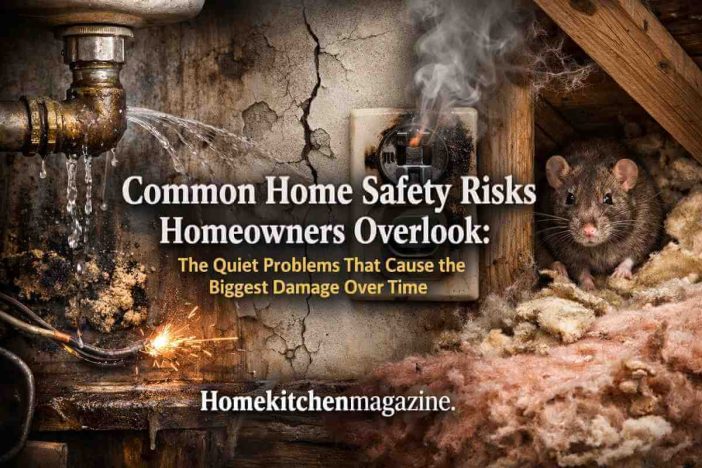
Common Home Safety Risks Homeowners Overlook
The Quiet Problems That Cause the Biggest Damage Over Time
After years of reviewing maintenance reports and inspection notes, a consistent pattern emerges:
homes don’t fail because of obvious dangers—they fail because of small risks left unattended.
Most homeowners focus on visible safety items: locks, alarms, smoke detectors. Those matter.
But the risks that cause the largest losses are usually quiet, gradual, and easy to dismiss.
This article identifies the common home safety risks homeowners overlook, explains why they’re missed, and shows how to address them calmly—without fear-based tactics or unnecessary upgrades.
What Makes a Risk “Overlooked”?
An overlooked risk typically shares three traits:
- It develops slowly
- It hides behind normal use
- It doesn’t trigger immediate alarms
These risks often feel harmless—until they compound.
The Most Common Home Safety Risks Homeowners Overlook
1. Minor Plumbing Leaks That Never “Seem Urgent”
Why it’s overlooked:
A drip under a sink or a damp cabinet doesn’t feel dangerous.
Why it’s costly:
Moisture spreads, materials weaken, and mold conditions develop long before leaks are obvious.
Prevention Approach:
- Inspect high-risk plumbing connections regularly
- Use early detection strategies rather than waiting for visible damage
Small leaks are often dismissed, even though early water damage prevention is one of the most effective ways to avoid silent, long-term losses.
2. Electrical Load Creep Over Time
Why it’s overlooked:
Homes gradually add devices—chargers, appliances, smart systems—without reassessing capacity.
Why it’s risky:
Overloaded circuits increase heat, wear, and fire risk.
Prevention Approach:
- Review circuit loads periodically
- Watch for warm outlets or frequent breaker trips
- Treat electrical safety as a system, not a single upgrade
3. Poor Drainage Around the Foundation
Why it’s overlooked:
Drainage issues don’t cause immediate interior damage.
Why it’s dangerous:
Water pooling near foundations accelerates structural stress and moisture intrusion.
Prevention Approach:
- Ensure grading directs water away from the home
- Keep gutters and downspouts clear
- Address pooling early—before interior symptoms appear
4. Aging Fire Safety Devices That “Still Seem Fine”
Why it’s overlooked:
Smoke detectors that chirp occasionally or look intact feel functional.
Why it’s risky:
Detection devices degrade quietly. When needed most, they may fail.
Prevention Approach:
- Replace detectors on a clear schedule
- Test interconnected systems regularly
- Align checks with a structured maintenance routine
Fire detection devices are most reliable when reviewed as part of an essential home maintenance checklist, rather than assumed to work indefinitely.
5. Doors and Windows That Don’t Seal Properly
Why it’s overlooked:
Drafts and stiff frames feel like comfort issues—not safety concerns.
Why it matters:
Poor seals affect:
- Security
- Moisture control
- Energy efficiency
- Pest entry
Prevention Approach:
- Inspect seals and alignment annually
- Treat access points as part of a broader safety system
6. Appliance Hoses and Connections Past Their Prime
Why it’s overlooked:
Appliances work—until they don’t.
Why it’s costly:
Aging hoses are among the most common causes of sudden water damage.
Prevention Approach:
- Replace hoses proactively
- Inspect connections during routine checks
- Don’t rely on “no visible leak” as proof of safety
7. Indoor Airflow and Ventilation Gaps
Why it’s overlooked:
Poor airflow isn’t immediately dangerous.
Why it’s risky:
Ventilation issues can contribute to:
- Moisture buildup
- Indoor air quality problems
- HVAC strain
Prevention Approach:
- Check vents and airflow consistency
- Maintain HVAC systems on schedule
- Treat air movement as part of home safety
8. Maintenance Tasks That Live Only in Memory
Why it’s overlooked:
Many homeowners “remember” to check things—until they don’t.
Why it’s dangerous:
Unwritten routines fade. Systems fail quietly.
Prevention Approach:
- Use a documented checklist
- Review quarterly, not just annually
Fire detection devices are most reliable when reviewed as part of an essential home maintenance checklist, rather than assumed to work indefinitely.
Why Overlooked Risks Cost More Than Obvious Ones
Obvious risks trigger action. Overlooked risks delay it.
Delayed response leads to:
- Wider damage spread
- Higher repair costs
- Insurance complications
- Disruption to daily living
Prevention works best before urgency appears.
Many of these risks persist simply because they are never evaluated through a structured home safety inspection designed to catch problems before visible damage appears.
These overlooked risks illustrate how safety and predictability influence value, long before problems appear in listings or negotiations.
Expert Insight: What Inspectors Flag Most Often
Across routine inspections, the most common notes involve:
- Moisture indicators without visible leaks
- Electrical loads exceeding original design
- Aging safety devices past recommended lifespan
These aren’t dramatic failures—but they are predictable ones.
Practical Tips to Catch Overlooked Risks Early
- Walk your home with a systems mindset
- Look for change, not disaster
- Treat discomfort as information
- Log findings—even when nothing seems wrong
Consistency turns awareness into prevention.
FAQ – People Also Ask
What is the most common overlooked home safety risk?
Slow plumbing leaks and aging appliance hoses are among the most frequently missed issues.
How can I identify hidden home safety risks?
Watch for subtle changes—odors, pressure shifts, small stains, or system noise.
Are overlooked risks more expensive to fix?
Yes. The longer a risk develops unnoticed, the higher the eventual cost.
How often should I review home safety risks?
Quarterly reviews with an annual deep assessment provide strong coverage.
This guide is part of our Home Safety, Maintenance & Prevention hub, where we connect inspections, preventive maintenance, and long-term safety systems into one structured framework for homeowners.
Wrapping Up: Safety Problems Don’t Announce Themselves
The most damaging home safety risks don’t arrive loudly.
They arrive quietly—and grow when ignored.
By learning to recognize what’s commonly overlooked, homeowners gain a powerful advantage: time.
Time to act calmly, affordably, and effectively.
That’s how prevention works—and how safe homes stay safe.
Reference
- References to established home inspection standards and fire safety organizations used to reinforce widely accepted best practices