Best Home Safety Systems for Long-Term Protection: A Practical, Prevention-First Guide for Homeowners Who Think Long Term
Best home safety systems are not built to react to emergencies — they are designed to prevent risk from quietly building over time. Most home safety failures don’t happen suddenly; they emerge from ignored maintenance, outdated systems, and delayed decisions. This guide breaks down the home safety systems that actually protect your home long term, without panic, gimmicks, or short-lived trends.
This guide is part of our Home Safety, Maintenance & Prevention hub, where long-term safety decisions are examined through preventive systems, maintenance patterns, and real-world home ownership experience.
When homeowners think about safety systems, they often picture alarms, cameras, or emergency alerts.
But true home safety is not about reacting to danger — it’s about preventing risk from building up in the first place.
In years of reviewing homes, maintenance plans, and safety upgrades, one pattern appears consistently:
Homes that fail are rarely unsafe by accident. They are unsafe by neglect.
Long-term protection means choosing systems that:
- Reduce risk continuously
- Age well with the home
- Integrate with maintenance routines
- Protect both people and property value
This article explains which home safety systems actually meet that standard, and how to evaluate them without falling into fear-based marketing.
What Defines the Best Home Safety Systems for Long-Term Protection?
Before listing systems, we need to clarify criteria.
A long-term home safety system must meet at least four conditions:
1. Preventive, Not Reactive
It reduces risk before damage or danger occurs.
2. Durable & Maintainable
It can function reliably for years with reasonable upkeep.
3. Integrated With Daily Living
It fits into how the home is actually used, not how it’s marketed.
4. Value-Preserving
It protects the home’s condition, insurability, and resale appeal.
Any system that fails one of these usually becomes obsolete—or ignored.
The Core Home Safety Systems That Truly Protect Long Term
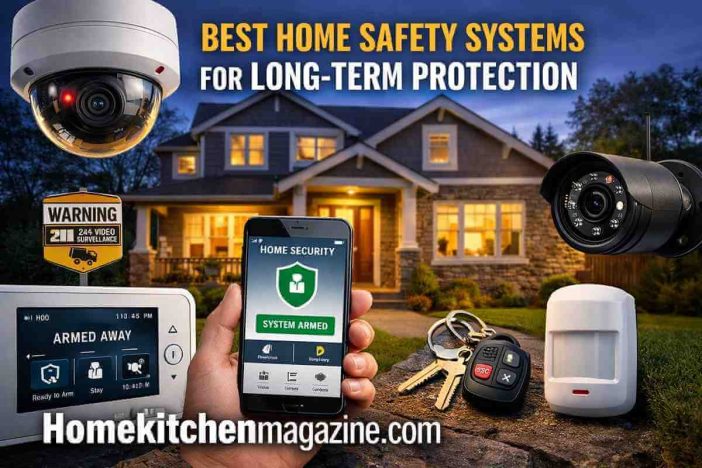
1. Home Security Systems Designed for Stability, Not Hype
Modern security systems are no longer just about alarms.
The most effective ones focus on deterrence, monitoring, and continuity.
What Works Long Term
- Centralized monitoring (professional or hybrid)
- Door/window sensors with low false-alarm rates
- Battery-backed components
- Simple, non-obtrusive interfaces
What Fails Over Time
- App-only systems with no backup
- Overly complex setups homeowners stop using
- Trend-based gadgets replaced every 1–2 years
Expert Insight:
In practice, homes with simpler, consistently used security systems outperform homes with expensive but neglected setups.
2. Fire Safety Systems That Go Beyond Smoke Alarms
Fire safety is often treated as a checkbox.
That’s a mistake.
Long-Term Fire Protection Includes
- Interconnected smoke detectors
- Carbon monoxide detectors in key zones
- Clear electrical load management
- Accessible shut-off knowledge
Many homes technically “have alarms” but fail to maintain them properly.
Practical Tip:
Set a recurring maintenance reminder aligned with your home maintenance checklist to test and replace detectors before they fail silently.
3. Water Damage Prevention Systems (The Most Overlooked Risk)
If there is one system homeowners underestimate, it’s water damage prevention.
Water damage:
- Is among the most expensive home repairs
- Often voids insurance claims when ignored
- Reduces property value quietly
Effective Long-Term Solutions
- Leak detection sensors in high-risk areas
- Automatic shut-off valves
- Pressure regulation systems
Real-World Pattern:
Homes that detect leaks early rarely face catastrophic damage.
Homes that don’t often discover problems when it’s already structural.
4. Electrical Safety & Load Management Systems
Electrical risks don’t usually announce themselves.
Long-term safety focuses on:
- Circuit load balancing
- Updated breaker panels
- Surge protection
- Clear labeling and access
Why This Matters
Electrical issues are a leading cause of home fires—but are rarely treated as a “system” problem.
Authority Reference:
Fire safety organizations consistently highlight outdated electrical systems as a major residential risk factor.
5. Preventive Maintenance Systems That Tie Everything Together
No safety system works without maintenance.
The strongest homes rely on:
- Scheduled inspections
- System-specific maintenance cycles
- Documentation and tracking
This is where safety stops being about devices and becomes about systems thinking.
How These Systems Work Together (Not Independently)
One of the biggest homeowner mistakes is treating safety systems as isolated purchases.
This integrated approach reflects the prevention-first framework used throughout our Home Safety, Maintenance & Prevention hub.
In reality:
- Security systems deter intrusion
- Fire and electrical systems reduce catastrophic risk
- Water protection preserves structure
- Maintenance systems keep everything functional
Homes that integrate these layers experience:
- Lower long-term costs
- Fewer emergencies
- Higher insurance confidence
- Better resale positioning
Practical Evaluation Framework (Use Before Buying Anything)
Before investing in any safety system, ask:
- Will I still use this in 5 years?
- Does it reduce risk continuously?
- Can it be maintained easily?
- Does it protect property value—not just people?
- Is it compatible with how my home is used daily?
If the answer is “no” to two or more, reconsider.
FAQ – People Also Ask
What is the most important home safety system?
There is no single system. Long-term protection comes from layered prevention, not one device.
Are smart home safety systems worth it?
They are—if they remain usable, supported, and maintained. Complexity without consistency fails.
How often should home safety systems be checked?
At minimum, annually. Critical components should be reviewed more frequently.
Do safety systems increase home value?
Indirectly, yes. They reduce risk, protect condition, and improve buyer confidence.
This guide is part of our Home Safety, Maintenance & Prevention hub, where we examine long-term systems and strategies that help homeowners reduce risk and protect their homes reliably over time.
Wrapping Up: Safety Is a System, Not a Purchase
The safest homes are not the most expensive ones.
They are the ones where systems are chosen carefully, maintained consistently, and integrated intelligently.
Long-term home protection is quiet.
It works in the background.
And when done right, it prevents problems you never have to face.
That is the real goal of home safety.