
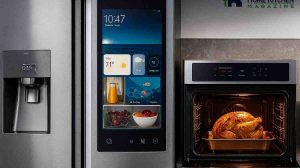
In the warm yellow glow of the under-cabinet lights, the oven door slides open almost before you’ve finished lifting your spoon. A gentle ping from your phone reminds you: dinner’s ready. You stand there, half-smiling, half-amazed. Because the countertop assistant beside you has started steaming vegetables, the fridge has already suggested a side salad, and the smart kettle quietly heated water for your tea. This isn’t a scene from a science-fiction novel; it’s the daily reality of Smart kitchen automation arriving quietly in homes everywhere.
The promise is seductive: fewer hours chopping and prepping, fewer last-minute trips to the corner shop, fewer burned dinners and flustered stress. But beyond the hype, there’s real data, real economics and real decisions to be made. This article walks you through the tangible world of smart kitchens: what works, what doesn’t, what to invest in, and how to make the most of it — so you’re not just chasing gadgets, but building a kitchen that actually feels smarter, easier and more human.
Curious about how Smart kitchen automation fits into the broader wave of home innovation? Dive into our Smart Kitchen Technology article to explore the latest AI-driven trends, appliance integration, and futuristic kitchen concepts shaping modern homes.
Why Smart Kitchens are more than a gimmick
We all know the standard kitchen: fridge, stove, microwave, blender, maybe a pressure cooker. But when you start layering in connectivity, sensors, artificial intelligence and automated workflows — cooking schedules that sync with your calendar, ingredients that reorder themselves, ovens that cook to your taste and pause when you walk in the door — you move into a different realm.
Here are some key data points:
- The global market for smart kitchen appliances was estimated at USD 18.75 billion in 2023, and is projected to reach about USD 60.20 billion by 2030, with a CAGR of ~17.9% from 2024-2030.
- One report says the market will grow from USD 25.16 billion in 2024 to USD 29.32 billion in 2025, a growth of ~16.6% year-on-year.
- For built-in smart kitchen appliances (e.g., connected ovens, dishwashers, smart refrigerators), one forecast sees the market climbing from USD 8,890.3 million in 2025 to about USD 18,352.9 million by 2030, with average annual growth ~15.6%.
- For kitchen robotics and automation (robotic arms, automated cooking systems) the size was ~ USD 2.63 billion in 2024, expected to reach ~ USD 2.86 billion in 2025 (CAGR ~9%) and further to ~ USD 4.19 billion by 2029.
To understand the global potential of Smart kitchen automation, recent industry reports reveal that the smart kitchen appliances market is expected to reach USD 60.20 billion by 2030, growing at a compound annual rate (CAGR) of around 17.9%. This strong growth reflects how consumers are increasingly integrating connected appliances, AI, and automation technologies into their everyday cooking routines.
Source: Smart Kitchen Appliances Market Size & Share Report, 2030
Taken together, the trend is clear: people are increasingly willing to invest in appliances and systems that reduce friction in the kitchen. Urban lifestyles, dual-income households, smaller living spaces, time pressure — all drive this. One piece of evidence: search interest for “smart kitchen appliances” peaked in October 2024 and again in July 2025, according to Google Trends data.
So yes — the tools are moving from trend to mainstream. The challenge for many consumers is: which gadgets and systems genuinely add value, and which are just expensive novelty?
What “Smart kitchen automation” includes (and what it doesn’t)
Let’s clear definitions out of the way, to avoid disappointment and confusion.
Real smart-kitchen automation covers:
- Appliances that connect via WiFi/Bluetooth/IoT and can be controlled remotely (via smartphone, voice, or smart-home hub).
- Systems that can schedule, pre-heat, measure, stir, cook or finish tasks automatically.
- Devices that integrate into workflows: e.g., your smart fridge sensing that two items are low, then ordering replacements; your oven that knows your “medium-rare” from your “well done” and adjusts itself.
- Assistive robots or mechanised tools (especially in commercial kitchens) that reduce human labour for repetitive kitchen tasks.
What it often does not include (despite marketing claims):
- Fully autonomous cooking of 3-course meals without human oversight (still rare in home kitchens).
- Perfect compatibility among all smart devices (many ecosystems are fragmented).
- Low cost (many high-end smart devices are still expensive).
- Instant ROI (return on investment) without some thought to use-case, maintenance, compatibility.
With those caveats, you can proceed more wisely.
5 Smart Kitchen Automation you must try (and how to use them wisely)
Here are five smart-kitchen gadgets/systems that tend to deliver value — if you choose them properly and use them thoughtfully. For each, I’ll include actionable tips and examples.
1. Smart refrigerator with inventory & suggestion features
What it does: Beyond just chilling and freezing, a smart refrigerator may have interior cameras, sensors for items, connected apps that track what’s inside, and suggestion features (e.g., “you have carrots + spinach + chicken — how about stir-fry tonight?”).
Why it’s useful: Reduces food waste, helps with meal planning, avoids “What did I buy last week?” situations.
Actionable tips:
- Choose one with interior cameras or weight sensors.
- Use “pantry” mode in its app so you can check remotely what’s inside.
- Integrate with your phone calendar and meal-planning app if possible.
- Place frequently forgotten items (milk, eggs) at front and clearly label.
Example & stat: In one smart-appliance market breakdown, the refrigerators segment held ~ 36.06% of overall product revenue in 2023 for smart kitchen appliances.
Even the smartest fridge works best with a well-organized pantry. Explore our Best Pantry Organization Ideas for Small Kitchens to create harmony between your Smart kitchen automation and storage system—making your cooking space both connected and clutter-free.
2. Smart ovens / cooktops that adjust and monitor cooking
What it does: Ovens or induction cooktops that pre-heat automatically, adjust temperature based on sensors (e.g., if your pan overheats), send alerts to your phone, or even pause cooking when you step away/door opens.
Why it’s useful: Reduces risk of burned food, offers consistent results, helpful for busy households.
Actionable tips:
- Prioritise ones that integrate with voice assistants (Alexa, Google Home, etc).
- Use embedded recipe features — some smart ovens download step-by-step cooking guides.
- Test with simple recipes to learn how temperature control works.
Example: Some premium smart ovens now include built-in cameras to monitor browning of food and adjust accordingly.
3. Automated small appliances & connected “one-pot” cookers
What it does: Think smart multi-cookers, smart air fryers, connected pressure cookers, robotic stirring machines, even smart coffee/tea makers that “learn” your preferred strength/time.
Why it’s useful: These are often lower cost than whole-kitchen overhauls, and offer quicker visible benefits.
Actionable tips:
- Pick one or two “killer apps” you miss now (for example: pressure cooker that frees up your time, or air fryer that handles dinner while you work).
- Look for good after-sales support, software updates, recipe apps.
- Don’t overload your power circuits — many high-wattage appliances need dedicated circuits.
Stat: The “smart built-in kitchen appliances” market projection (2025-2030) suggests rapid uptake of connected dishwashers, refrigerators, intelligent cooking appliances.
4. Integrated kitchen systems / “ecosystems”
What it does: Rather than isolated devices, these systems allow multiple appliances (refrigerator, oven, cooktop, dishwasher, etc) to communicate via a single app or platform, sometimes with AI-driven suggestions, energy-saving modes, and holistic scheduling.
Why it’s useful: Efficiency gains are higher when devices “talk” to each other. For instance, your dishwasher might run at low-cost electrical hours while your oven is off; or your stove pre-heats just as you arrive home.
Actionable tips:
- Check compatibility (e.g., many devices may need the same brand/platform).
- Ensure you have a strong WiFi + maybe an edge-hub (some kitchens may need extra routers/extenders).
- Consider energy costs: some systems can shift high-load tasks (e.g., kettles, ovens) to cheaper tariff periods.
Example: Connected cooking platforms and “appliance-to-grid” response are accelerating, making smart kitchens core to home energy ecosystems.
5. Robotics & assisted cooking helpers
What it does: Robotic arms for chopping, stirring, plating; smart dispensers for ingredients; even mobile kitchen robots that assist in commercial settings. For home use, you might see stirring bots, smart mixers, or semi-automated cookers needing minimal supervision.
Why it’s useful: Reduces manual labour, supports households with less “hands-on” time, helps with repeatable cooking workflows.
Actionable tips:
- For home use, focus on semi-automated tools (e.g., stirring bots, robotic mixers) rather than full restaurant-style robots (still very expensive).
- Evaluate maintenance/support needs (robotic components tend to require more servicing).
- Start small: e.g., a smart stirring pot that can stir soup while you work.
Stat: The kitchen robotics & automation market (residential + commercial) is forecast to grow to ~ USD 4.19 billion by 2029 from ~ USD 2.63 billion in 2024.
Key considerations before you invest
As exciting as all this is, it’s wise to step back and assess carefully. Smart gadgets don’t automatically equal smart purchases. Here are some major factors to evaluate:
Compatibility & ecosystem lock-in
- If your fridge uses brand A’s ecosystem but your oven uses brand B, you may not get full “talking devices” benefits.
- Some platforms require subscription apps or paid firmware upgrades.
User experience + learning curve
- Even the best smart appliance won’t help if you don’t know how to use its features fully.
- Look for good user interface, clear manuals, recipe support, localised support (especially in your country/region).
Reliability + support
- Smart devices tend to have more software/firmware components => more chance of bugs, updates required, connectivity issues.
- Check warranty, local service centres, spare part availability.
Cost vs payoff
- High upfront cost: many smart/appliance-integrated systems cost 2× or more of “dumb” equivalents.
- Payoff depends on how much you use the “smart” features (remote control, meal planning, automation). If you rarely use remote control or scheduling, you may not justify the premium.
Data + privacy
- Many smart kitchen devices collect usage data, cloud sync, sometimes share recipe logs or consumption patterns. Be aware of privacy policies.
- Ensure your home network security is strong (using guest networks, strong passwords, device firmware updates).
Energy & sustainability
- Smart devices can help reduce waste (food, energy) if well used — but if they draw “standby” power 24/7 or get replaced frequently, that’s counterproductive.
- Some models allow “smart scheduling” to use cheaper off-peak power or integrate with solar home systems.
Integrating Smart kitchen automation with energy-saving techniques can multiply your efficiency gains. Discover how to lower your utility bills while maintaining a connected lifestyle in our detailed guide to Energy Efficient Kitchen Upgrades, featuring practical tips that align perfectly with smart devices.
How to build your roadmap: a 4-step plan
To ensure you don’t buy blindly and create regret, adopt a roadmap.
- List your pain points: What drives you crazy in your kitchen right now? Meal prep? Forgotten food? Burnt dinners? Lack of time?
- Prototype with one smart device: Choose one gadget that addresses your top pain point (e.g., a smart air fryer you can schedule). Get comfortable.
- Evaluate integration: After some months, ask: Did I save time? Did I save money/waste? Did the user experience feel intuitive? Will adding a second device help significantly?
- Scale thoughtfully: Only when the first device delivers real value, consider investing in a whole integrated system or multiple devices. Keep track of cost vs benefit (time saved, food saved, stress saved).
Region & affordability emphasis — Indonesia & emerging markets
Since you’re in Jakarta / Indonesia, here are special notes:
- In many emerging markets, Internet infrastructure, compatibility with local apps, local service centres and availability of spare parts can be weaker. So prioritise devices with proven local support.
- Smart kitchen adoption is rising globally, but cost sensitivity remains major in many households. Targeting smaller modules (smart cookers, connected kettles) might deliver better ROI.
- Partnering smart appliance purchases with local grants/energy-rebate programs (if available) can reduce cost.
The future of smart kitchens — what to watch
- AI & recipe-based automation: Kitchens that learn your taste, then pre-adjust cooking profiles accordingly.
- Ingredient tracking + reordering: Fridges/pantry sensors + apps that reorder groceries when stock is low.
- Integration with health: Cooking plans tied to nutrition, diet restrictions, fitness apps.
- Energy grid interplay: Smart devices that coordinate with home solar + grid tariffs + demand response (appliance-to-grid) systems.
- Affordability & modularity: As tech improves & cost drops, expect more “smart kitchen kits” targeted at middle markets, not just premium.
Wrapping up
In a world that never slows down, your kitchen doesn’t have to be a battlefield of time, mess and regret. With well-chosen tools, thoughtful integration, and realistic expectations, Smart kitchen automation can elevate your daily life — from “just making dinner” to “crafting moments of ease, creativity and nourishment.”
Your next step? Identify your one biggest kitchen pain now, and let that seed your first smart investment. Use it. Measure it. Decide if it deserves its place in your home. Because it’s not the gadget that makes the difference — it’s how you use it.


 Home Kitchen Magazine is a blog dedicated to giving you inspiration and tips every day about the home, kitchen and garden.

